
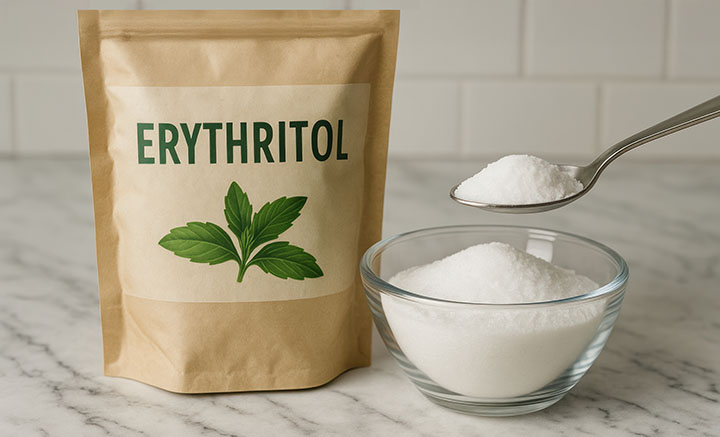
Review in Journal of Toxicology Finds No Reliable Evidence Linking Erythritol to Adverse Cardiovascular Outcomes
An analysis of the existing literature finds no consistent or reliable evidence that erythritol causes adverse health outcomes at typical intake levels. Observed associations with cardiovascular events appear to reflect underlying metabolic risk factors rather than a causal effect of erythritol.
Review Authors: Lyle D. Burgoon and Matthew Von Hendy
Study Overview
Erythritol is a sweetener that is found naturally in many foods and is produced within our own bodies. Recently, there have been questions raised about the safety of erythritol, and whether it might lead to adverse cardiovascular events.
With that in mind, we sought to critically evaluate the literature through a systematic review to answer specific questions:
- What is the current state of the science regarding the absorption, distribution, metabolism, and excretion (ADME) of erythritol?
- What is the current state of the science with respect to the toxicological profile of erythritol?
- What are the mechanisms that endogenous and exogenous erythritol may play in blood clotting?
- What is the expected exposure that people may have to endogenous erythritol?
Findings on Absorption and Metabolism
We found in our review that 60%–88.5% of exogenous erythritol is rapidly absorbed into the body, and blood levels peak around 60–90 minutes following administration. There is insufficient data to accurately estimate the elimination half-life. It also appears that erythritol is not substantially metabolized once it is absorbed.
No Reliable Evidence of Harm at Typical Intake Levels
Based on our analysis of the existing literature, there is no reliable scientific evidence to conclude that erythritol causes adverse health outcomes in humans when used at human exposure levels found in food and beverages. Upon synthesis of the evidence, it appears that the association widely reported in the press of erythritol being associated with major adverse cardiovascular events (MACE) is actually a case of a shared upstream biological state/event (e.g., metabolic disorder, increased glycemia, increased central adiposity) driving the increase in erythritol and MACE.
Highlights
- Describes the current state of the science on erythritol safety.
- 60%–88.5% of exogenous erythritol is absorbed by the body.
- There is a general lack of consistent and coherent evidence suggesting adverse effects of erythritol at human relevant doses/concentrations
- Observations that erythritol leads to major adverse coronary events (MACE) are likely due to the constellation of diseases that drive the pentose phosphate pathway also drive MACE occurrence and has nothing to do with erythritol.
Related Resources
Read Journal of Toxicology & Regulatory Policy
Learn more about erythritol.