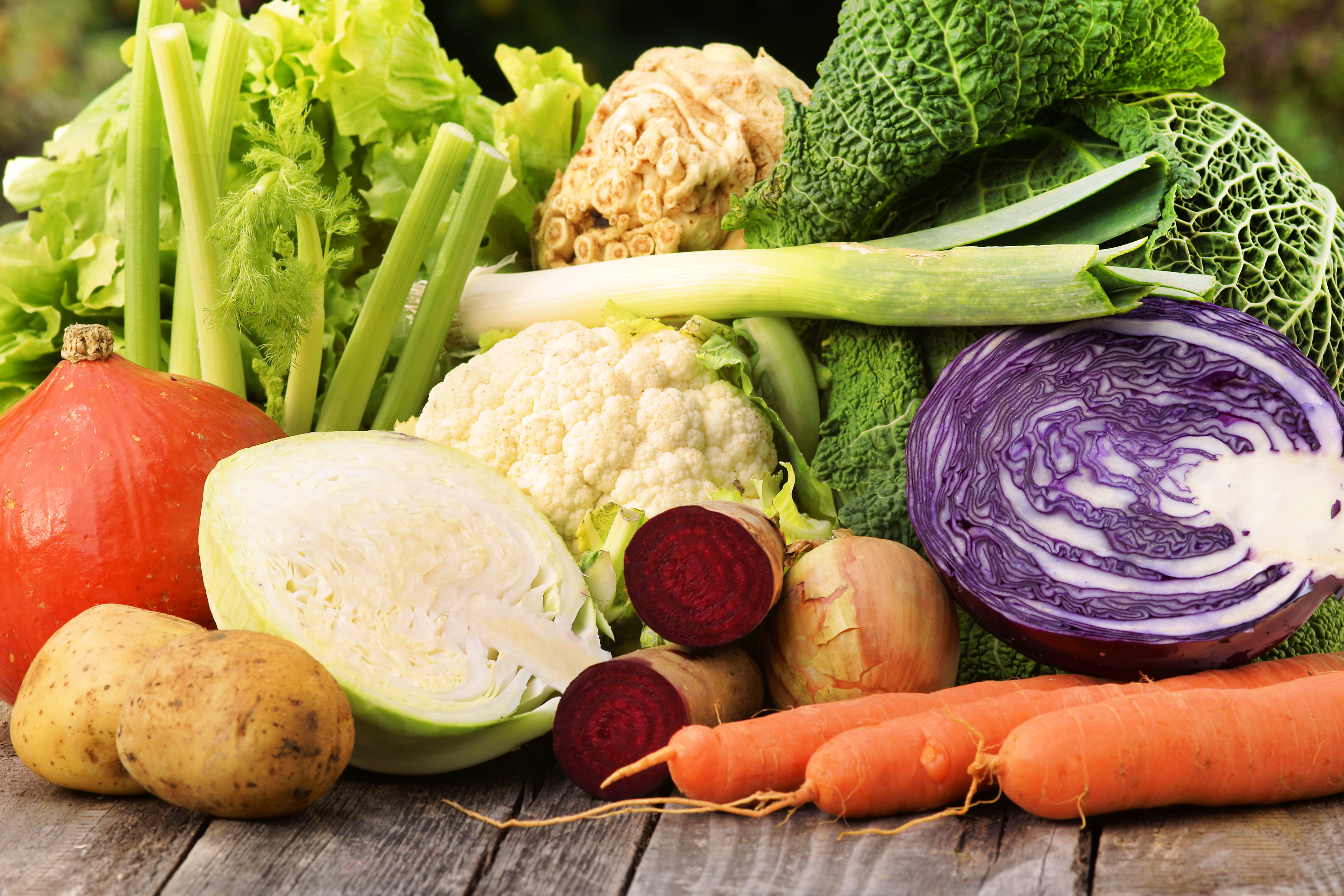
Eating a diet rich in fruits and vegetables is one of the most important steps to take in maintaining good health. However, it is not a surprise that this is where Americans tend to struggle the most in the quest for better health. As the seasons change and we go from the fall harvest to winter, many of our favorites disappear or become quite pricey.
And while it may seem like so much produce is out of season, there actually are some super tasty fruits and veggies that come into season during winter. Here’s a rundown of seasonal winter produce that can help bolster your nutrition this winter.
Persimmon
There are two types of persimmons, the Hachiya (shaped like an acorn) and Fuyu (shaped like a squashed tomato.) Persimmons are an excellent source of Vitamin A and fiber at only approximately 120 calories. A ripe persimmon has a rich and sweet flavor that make it great as a stand-alone snack or addition to recipe. Note: You want to be sure the persimmon is completely ripe otherwise it can taste bitter and starchy.
Pomegranate
The pomegranate is a very sweet fruit made up of little seeds. The pomegranate is a great source of fiber, folate, Vitamin C and Vitamin K. It can be a bit labor intensive to pull the seeds from the pomegranate, but it is well worth the effort as you will end up with several servings of seeds. Sprinkle them on a salad or maybe try Cranberry Pomegranate Sauce this holiday season for a fun low-sugar twist on cranberry sauce.
Kiwi
This sweet little jewel of a fruit comes into season in the wintertime. The kiwi is a good source of Vitamin C, Vitamin E, Vitamin K, copper, fiber, and potassium. Easy to peel, they are a tasty and healthy snack at 42 calories.
Snow Peas
Snow peas are a rich in nutrition as a good source of Riboflavin, Vitamin B6, Pantothenic acid, Magnesium, Phosphorous, Potassium, Fiber, Vitamins A, C, K, Thiamin, Folate, Iron, and Manganese. They are also very low in calories at approximately 35 calories for a 1 cup serving. They make a fantastic low-cal midday snack or can be used to add a fresh crunch to any dish or salad.
Parsnips
If you enjoy carrots, you will like the parsnips. While parsnips are lighter in color, they have a similar taste and texture to carrots. They are a good source of Potassium, Vitamin C, Folate, and Manganese. Use parsnips as a way to mix up your usual recipes and make fun, healthy winter recipes.
Winter Squash
The term winter squash encompasses several varieties of squash such as Butternut, Acorn, Delicata, and Spaghetti squash that are highly available in your local grocery in the winter months. While nutrition will vary between squash, they all are low in calories and high in fiber for a healthy winter veggie option. You can roast them or mash them, or even use them as a pasta alternative. Try this Roasted Butternut Squash with Goat Cheese replacing the sugar with stevia to keep it light. There are no limits to the ways you can prepare these winter veggies!
Check out the seasonal recipes section on www.steviabenefits.org for more recipes to keep you warm this winter.
Carolyn Reynaud, MS, RD, LD is a licensed registered dietitian. She received her BS in nutrition from Michigan State University and her Masters and Certificate in Public Health from Georgia State University. She has experience working in several avenues of health care including corporate wellness, clinical disease management, research, and health promotion. She has been working as a health coach specialist for close to 6 years, where she counsels patients on preventative healthcare and helps them meet their health goals. Follow her on Twitter @ReynaudCari.
Mardi Gras, the day that culminates Carnival celebrations, is typically filled with parties, parades, masks and costumes, and rich foods before the Lenten season. This recipe will crown you king or queen of your own Mardi Gras festivities. Keep your calories in check this Fat Tuesday with this traditional king cake recipe using sucralose no calorie sweetener, granulated, instead of sugar.
Barry M Popkin, Camila Corvalan, Laurence M
Grummer-Strawn
Vol. 395, No. 10217
February 14, 2020-The first publication in the series provides an overview of the issue, and cites the factors that contribute to malnutrition. While LNCS is not mentioned, the article does cite the increased sales of “non-essential foods and beverages”, including “junk foods and sugar-sweetened beverages”. Rapid growth in this sector is especially noted in lower-income countries, where sales are already high. Overall, this paper takes a look at the impact of the food environment and the availability of non-nutritious foods and beverages.
Jonathan C Wells, Ana Lydia Sawaya, Rasmus
Wibaek, Martha Mwangome, Marios S Poullas, Chittaranjan S Yajnik, Alessandro
Demaio
Vol. 395, No. 10217
The second publication in the series describes
how historically malnutrition has been studied separately as either “chronic or
acute undernutrition, energy inadequacy, and micronutrient deficiencies” or
“overweight, obesity, and dietary excess”. This paper also discusses early
undernutrition preceding overweight or obesity later in life and the overall
health consequences. LNCS are not mentioned in this paper.
Corinna Hawkes, Marie T Ruel, Leah Salm,
Bryony Sinclair, Francesco Branca
Vol. 395, No. 10218
The third publication in the series describes
how “worldwide availability of unhealthy processed foods, snacks, and beverages
high in energy, sugar, fat, and salt has soared since 2004.” It notes that
“manufacturers, supermarkets, food vendors, and restaurants make these foods
easily accessible and affordable, often using aggressive marketing techniques.”
It goes on to discuss how previous attempts at addressing
malnutrition/undernutrition unintentionally led to an increase in risk for
obesity, overweight and diet-related NCDs in low- and middle income countries.
Life nutrition, diet diversity, food environments and socioeconomic factors are
cited. A holistic approach, including changes in governance, financing and
capacity building, is suggested. LNCS are not mentioned in this paper.
Rachel Nugent, Carol Levin, Jessica Hale,
Brian Hutchinson
Vol. 395, No. 10218
The fourth and final paper in the series examined methods for conducting economic evaluations of malnutrition, identifies gaps, and recommends improvements to economic modeling. Suggests that economic models are enhanced to incorporate effects for both undernutrition and overweight in the same population. LNCS are not mentioned in this paper.
The primary objective of this review is to identify diabetes risk associated with intake of non-nutritive sweeteners (NNS) by examining glucose homeostasis, body weight and gut microbiota in epidemiological and clinical studies. The secondary objective is to clarify the potential mechanisms of action of NNS on glucose homeostasis.
Background
The consumption of NNS has rapidly increased in the past few decades globally.
Some studies suggest suggested that increasing NNS consumption may have resulted from the WHO guidelines on sugar intake, increased availability of NNS-containing products, as well as decreased prices of NNS.
Studies has also found that NNS consumers reported lower calorie intake compared with non-NNS consumers, although NNS consumers were overweight and obese compared with non-NNS consumers.
Consumers’ choice of NNS rather than sugar or other nutritive sweeteners may be attributable to their potential to reduce weight gain. However, it is not clear what the effects of NNS consumption are on glycaemic control and the incidence of type 2 diabetes.
Methods
No information was given on the methodology of
this review.
Findings
Though meta-analyses of prospective studies showed a positive association between ASB intake and risk of T2DM, confounding in the studies is a potential problem.
NNS intake does not appear to differ from water in glucose control in the absence of a glucose preload, while NNS intake does not appear to influence postprandial glucose responses in the presence of a glucose load.
Conclusions
The authors conclude that, given that there are so few chronic human interventions, there is difficulty in confirming whether NNS intake adversely influences glucose control.
They also note that, while most animal studies demonstrated gut microbiota alteration by NNS intake, a limited number of clinical studies failed to support this finding.
Long-term, well-designed clinical interventions are needed to identify the effect of NNS on glucose control related with risk of T2DM.
SOURCE: Journal of the Academy of Nutrition and Dietetics.2019;119(7):1099-1107
SUMMARY BY: Robyn Flipse, MS, MA, RDN
February 7, 2020
Introduction
The preference for sweet-tasting foods is considered an evolutionarily conserved trait. This can be explained, in part, by the fact the hedonic value of sweet taste is mediated by the opioid system and that sugar can increase extracellular dopamine in the area of the brain involved with motivation, similar to reinforcers like alcohol. It is also known that the reinforcing value of foods is a prime driver of eating choices and energy intake, all of which may make it harder to reduce the consumption of foods high in added sugars than previously understood.
Background
The Dietary Guidelines for Americans have recommended
reducing added sugars in the diet since their first publication in 1980, yet consumption
by Americans continues to exceed recommended levels. Flack, et.al., propose
that the difficulty in reducing the intake of added sugars may be due to the
increase in their reinforcing value when their consumption falls below a
baseline level, which based on a theory called the “Disequilibrium Approach.”
More specifically, in the “response deficit” form of disequilibrium, when
access falls below the baseline amount it results in an increase in
reinforcement. If these researchers are correct, the reinforcing value of foods
high in added sugars would be a mechanistic barrier to the behavior changes
needed to reduce their consumption.
Objective
This study investigated the effect of adhering to a diet low
in added sugar on the reinforcing value of foods high in added sugars relative
to foods lower in added sugars (termed “relative reinforcing value of sugars”
or RRVsugars ), while keeping total energy intake consistent. It was
hypothesized that the RRVsugars would increase after a one week period of
restriction of foods high in added sugars, with obese people showing a greater
increase in RRVsugars than normal weight subjects.
Study Design
After screening 100 potential participants, the final sample
included 42 people (37 females) who all reported habitually consuming more than
10% of their daily calories from added sugars. They were between 18 and 39
years of age, with 23 classified as normal weight (BMI <25) and 19 as obese
(BMI >30). A pre-post study design was used, including food frequency
questionnaires and resting metabolic rate, and pretreatment RRVsugars was
measured before the 7-day dietary intervention which reduced intake of sugar
below 10% and on the final day of the dietary intervention. All participants
were blinded to the purpose of the study and were strictly instructed not to
consume any foods or beverages (other than water and black tea or coffee)
outside of what was given to them during the controlled feeding intervention
period.
Each participant’s diet was designed to keep them in energy
balance and meet the average macronutrient distribution from the National
Health and Nutrition Examination Survey “What We Eat in America 2011-2012”
survey for adults (approximately 16% protein, 51% carbohydrate, 33%fat). The
diets included 2.5% to 4% of total energy from added sugars. Foods high in
natural sugars (approximately 4% of total energy) and nonnutritive sweeteners
were deliberately limited due to their sweet taste similar to foods high in
added sugars.
Before the intervention, participants completed taste tests
of foods both high and low in added sugars and rated each one on overall liking
using an 11-point scale. Their highest-liked food in each category was used to
assess their RRVsugars by evaluating the amount of operant
responding (mouse button presses) they performed to gain access to their
favorite food high in added sugars relative to their favorite food low in
sugar.
Results
The baseline RRVsugars did not differ across BMI,
but there was a significant increase of 32.7% in RRVsugars after the
dietary intervention in both normal weight and obese participants. This finding
differs from previous work showing obese subjects having a greater RRV of food
and energy intake than non-obese. Satiety scores assessed prior to each RRV
task did not affect the results, suggesting the participants were responding
for food during the RRV task out of a motivational drive to eat, not hunger.
Conclusion
The study found the reinforcing value of a behavior (e.g.,
eating sweet-tasting foods such as those high in added sugars) is increased
when the rate of that behavior is decreased below the baseline rate, which has
strong theoretical underpinnings in Disequilibrium Approach Theory. The authors
state, “Great and abrupt energy restriction produces obsessive preoccupations
with sweet foods, increased hedonic ratings of food, and an increased rewarding
value of food.” Consequently, restricting foods high in added sugars could have
the unintended consequence of increasing the RRV of foods these foods making it
more difficult to adhere to dietary guidance to lower their intake.
Robyn Flipse, MS, MA, RDN is a registered dietitian, cultural anthropologist and scientific advisor to the Calorie Control Council, whose 30+ year career includes maintaining a busy nutrition counseling practice, teaching food and nutrition courses at the university level, and authoring 2 popular diet books and numerous articles and blogs on health and fitness. Her ability to make sense out of confusing and sometimes controversial nutrition news has made her a frequent guest on major media outlets, including CNBC, FOX News and USA Today. Her passion is communicating practical nutrition information that empowers people to make the best food decisions they can in their everyday diets.Reach her on Twitter @EverydayRD and check out her blog The Everyday RD.
ARTICLE: Brain activity and connectivity changes in response to nutritive natural sugars, non-nutritive natural sugar replacements and artificial sweeteners
AUTHORS: Sze-Yen Tan and Robin M. Tucker
SOURCE: Nutrients 2019, 11(1): 94. Published 2019 Jan 5 doi:10.3390/nu11010094
SUMMARY BY: Robyn Flipse, MS, MA, RDN
December 23, 2019
INTRODUCTION
There is abundant evidence that food selection and dietary intake have a major impact on nutritional status and health. It is also widely recognized that flavor has a primary influence over food choice, and that taste is an essential component of flavor. What is not well understood is which taste mechanisms and perceptions are most predictive of dietary intake. If this were known, it would allow the development of a tool to assess taste preferences and identify those who could be at increased risk of chronic disease due to their food intake behavior.
OBJECTIVE
Since sugar intake has been proposed as a possible cause of the rising prevalence of global obesity, several studies have investigated whether sweet taste triggers food-seeking behaviors and increased energy intake, but a systematic review summarizing the findings has not been done. The purpose of this review was to determine if the available psychophysical tests for sweet taste were associated with dietary intake and, if possible, to determine which test is the most closely associated with dietary intake.
BACKGROUND
Taste testing can be measured using stimulus detection, intensity thresholds, and hedonic evaluation. Stimulus detection involves determining the absolute minimum concentration of a stimulus that can be detected or recognized among several that have the same stimulus in different concentrations. It is also described as the ability to detect the correct stimulus from several samples in which only one contains the stimulus of interest. Intensity measurements involve rating the intensity of a sample that contains the stimulus and answering a hedonic question about how much the stimulus is liked when comparing two or more at different concentrations. Each of these tests is independent of the others and provides separate but complementary information about how the stimulus is detected and perceived. These tests can help determine specific taste sensitivities in individuals, but do not reflect the complex sensory experiences provided by foods and beverages.
STUDY SELECTION
A systematic literature search was conducted of studies that collected at least one psychophysical measure of sweet taste and reported some sort of dietary intake measure. Studies were included that recruited healthy individuals with no restriction on adiposity, but excluded populations that had diabetes, alcoholism, or eating disorders; known changes in chemosensory function, such as gastric bypass patients; were pregnant; or were smokers. For this review, 3206 studies were identified and 17 included.
The selected studies were placed into three categories based
on the psychophysical methods utilized: (1) sensitivity measurements consisting
of detection and recognition thresholds (n=6), (2) intensity measures (n=8),
and (3) hedonic evaluations with liking or preference questions (n=13).
The six studies that examined relationships between taste sensitivity and dietary intake varied in terms of the stimuli used (glucose vs sucrose vs non-nutritive sweeteners), the ranges of concentrations tested, and the dietary assessment employed. Only two observed significant associations between sweet taste thresholds and dietary intake, and neither of these studies used non-nutritive sweeteners.
The eight studies that examined the relationship between measures of sweet taste intensity and dietary intake also varied in stimuli used and concentrations tested. Only two observed significant relationships and they had contradicting results. One found negative associations between intensity ratings for glucose stimulus and sweet food intake, total energy, and carbohydrates, including starch, sugar, and fructose. The other found that intensity ratings for Rebaudioside A and sucralose, two non-nutritive sweeteners, were positively associated with mean total energy intake.
Of the 13 papers examined for relationships between hedonic
evaluations and dietary intake, all but one used sucrose as a stimuli. Studies
utilizing sucrose did so at different
concentrations. Five of these studies also classified participants as sweet
“likers” or “dislikers” since this phenotype has been associated with different
hedonic responses to sweetness and could influence findings. Among those five
papers, three observed relationships between sweet “liker” status and greater
energy intake from sugar-sweetened beverages and refined and total sugars.
Among the remaining eight studies that did not classify
sweet likers or dislikers, associations between hedonic responses and dietary
intake were observed in five, although each reported different methods to
measure dietary intake. Both positive and negative associations were found
between preferred sweetness concentrations and total energy intake,
carbohydrate intake, percent sweet calories consumed, refined and total sugars,
and frequency of carbohydrate-rich food selections in these studies.
RESULTS
This review lends supports to the view that measuring
sensitivity, intensity, and hedonic responses provides distinct but
complementary information about the taste sensations experienced by an
individual. It found hedonic ratings had the greatest ability to correlate with
dietary intake, especially when sweet “likers” were analyzed separately, and
that no one method of dietary assessment was superior in identifying taste-diet
relationships.
The authors propose the discrepancies reported in these papers
were likely due to the differences in the taste stimuli and concentrations that
were used. They were further confounded by the fact different nutritive sugars
have different potencies at the same concentration and the human sweet receptor
responds to many compounds besides mono- and disaccharides, including amino
acids, proteins, and non-nutritive sweeteners.
CONCLUSION
Only a small proportion of the studies reviewed reported significant associations between taste sensitivity, intensity, and hedonics with dietary intake. Of those that reported significant associations, sensitivity and intensity measurements were negatively associated with intake, while liking and preferred concentration measurements (hedonics) were positively associated with intake. Further research is needed before a standardized method of taste sensitivity and dietary intake can be considered.
POINTS TO CONSIDER
Taste testing studies that rely on non-random
subject selection or the inability to blind researchers and participants to the
purpose of the study are at a high risk of bias.
Results from studies that did not classify
subjects as sweet “likers” or “dislikers” may have been skewed by unknowingly having
a higher or lower percentage of sweet “likers” among the participants. Those
individuals who were classified as sweet “likers” may have been rated as such based
on a specific sweet stimuli at a specific concentration, but may not have the
same response to different stimuli and/or concentrations.
Diet-taste relationships can be obscured depending
on the type of food intake assessment used. In a 24-hour diet recall, the
reporting period may be too short to detect changes in average energy intake
while Food Frequency Questionnaires are reliant on the ability to accurately
remember what was eaten, how much, and how often over a given period of time.
Robyn Flipse, MS, MA, RDN is a registered dietitian, cultural anthropologist and scientific advisor to the Calorie Control Council, whose 30+ year career includes maintaining a busy nutrition counseling practice, teaching food and nutrition courses at the university level, and authoring 2 popular diet books and numerous articles and blogs on health and fitness. Her ability to make sense out of confusing and sometimes controversial nutrition news has made her a frequent guest on major media outlets, including CNBC, FOX News and USA Today. Her passion is communicating practical nutrition information that empowers people to make the best food decisions they can in their everyday diets.Reach her on Twitter @EverydayRD and check out her blog The Everyday RD.
Do you have questions about low-calorie sweeteners? Want to learn more about maintaining a healthy lifestyle? You asked and we listened. Our resident Registered Dietitians answered the most popular questions about low-calorie sweeteners.

 Carolyn Reynaud, MS, RD, LD is a licensed registered dietitian. She received her BS in nutrition from Michigan State University and her Masters and Certificate in Public Health from Georgia State University. She has experience working in several avenues of health care including corporate wellness, clinical disease management, research, and health promotion. She has been working as a health coach specialist for close to 6 years, where she counsels patients on preventative healthcare and helps them meet their health goals. Follow her on Twitter @ReynaudCari.