
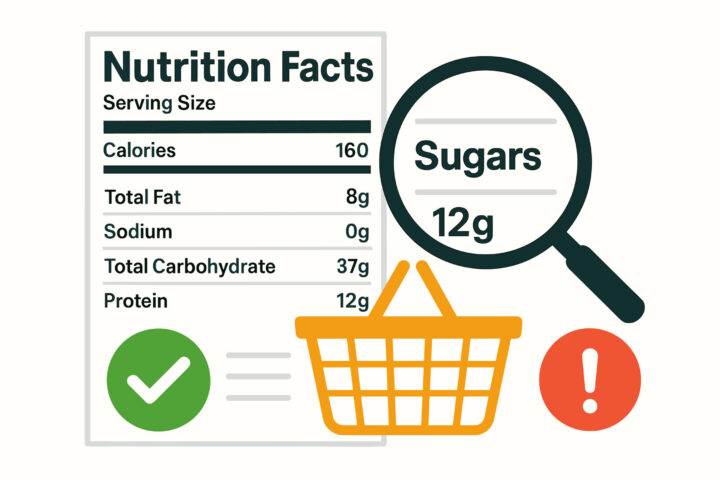
FDA Exempts Allulose from Added Sugar Labeling Requirements, recognizing the rare sugar’s unique metabolic profile and minimal impact on blood glucose and calories.
For the first time, the U.S. Food and Drug Administration (FDA) is allowing an ingredient chemically classified as a “sugar” to not be labeled as part of the Total or Added Sugars listings on Nutrition Facts labels.
The FDA announced their draft guidance in April 2019 the that allulose won’t be counted as “Total Sugars” or “Added Sugars” on the updated Nutrition Facts label. The new label requirements took effect in January 2020. Among other changes, the updated label requires companies to separately list “Added Sugars” beneath “Total Sugars.”
About Allulose
Allulose is considered a “rare sugar” due to its presence in nature in very small quantities and its chemical makeup as a monosaccharide. While allulose provides the same sweet taste, texture, and other technical attributes as table sugar, it is not metabolized as energy in the body. Therefore, it provides a negligible amount of calories and does not impact blood glucose levels, thus qualifying allulose as a low-calorie sweetener.
Allulose was discovered in small amounts in nature and fruits such as figs, raisins, maple syrup and jackfruit. It can also be made from fructose as well as corn to support production scale. This is especially critical given the broad scope of applications. This includes sweetening baked goods while enhancing browning and crumb structure, to replacing sugar in ice cream but remaining stable in freezing conditions.
The demonstrated benefits of allulose in tandem with FDA’s draft guidance on allulose labeling will help alleviate consumer confusion about the emerging sweetener. It will also clear the runway for industry innovation.
CCC Statement
“As manufacturers considered reformulating or innovating new products in advance of the January 2020 compliance deadline for the new Nutrition Facts labels, there was confusion among industry and consumers over how to interpret the labels of products containing allulose,” remarked Robert Rankin, president of the Calorie Control Council. “Consumers looking to manage or reduce intake of Total and Added Sugars can now be assured that allulose does not count toward those listings.”
The FDA has made several major updates to the nutrition label, including changes to the nutrients that must be declared. Now, “Added Sugars” must be included separately as a subset of “Total Sugars”. According to the FDA, “Added Sugars” include “sugars that are either added during the processing of foods, or are packaged as such (e.g., a bag of table sugar), and also includes sugars from syrups and honey, and sugars from concentrated fruit or vegetable juices.”
Allulose does not significantly affect blood glucose levels. It also contributes far fewer than 4 calories per gram and does not promote dental caries like other sugars may. As a result, the FDA intends to exercise enforcement discretion regarding the exclusion of allulose from “Total Sugars” and “Added Sugars,” including the % Daily Value declaration.
To learn more about the FDA guidance:
- The Federal Register (FR) announcement of FDA’s new draft guidance
- FDA’s Draft Guidance for Industry: The Declaration of Allulose and Calories from Allulose on Nutrition and Supplement Facts Labels, which includes a link to download the guidance
- FDA Allows Allulose to be Excluded from Total and Added Sugars, NOSH, May 1, 2019
- Tate & Lyle: ‘The first two things consumers look for on the Nutrition Facts panel now are calories and sugar’, Food Navigator, May 13, 2019
Learn more about allulose.