Recent Survey Finds Consumers Want Healthier Beverage Options

Posted by & filed under Diabetes/Blood Sugar Management.

Rising type 2 diabetes rates are prompting many Americans to look for healthier options. The perceptions of consumers have shifted and many are buying cleaner and healthier beverages. The pandemic has only heightened concerns as consumers are becoming more mindful of their dietary intake. Within beverages, the largest source of calories is sweetened beverages, accounting for 35% according to the 2020 Dietary Guidelines Advisory Council (DGAC) Scientific Report. Consumers are cleaning up their beverage selection by limiting and avoiding sugars in the diet according to a recent survey conducted by The International Food Information Council Foundation (IFC).

As the DGAC Scientific Report noted, low-and-no calorie sweetened beverages may be a useful tool for in weight management in adults and when (LNCS) can part of a balanced diet, low-and-no calorie sweeteners empower people living with diabetes because they do not raise glucose or insulin levels. “Millions of Americans are affected by diabetes and obesity. For these individuals, nutrition plays a major role in managing disease. LNCS are not a magic bullet but they are excellent tools to help reduce sugar intake, manage blood glucose levels, and reduce overall calorie intake” says Robert Rankin, president of the Calorie Control Council (CCC).

“Low-calorie sweeteners can serve an important role in diabetes management,” says Dr. Keri Peterson, Calorie Control Council medical advisor. Though a diagnosis of type 2 diabetes necessitates lifestyle changes, it does not require an elimination of sweet treats from the diet entirely. In a survey conducted by CCC, 27% of Americans said that they consume low-calorie sweeteners to manage their blood sugar levels. Substituting sugar-sweetened drinks and regular sodas for low-calorie sweetened beverages can make a significant impact on total daily calorie and added sugar consumption.

“Low-calorie sweeteners can serve an important role in diabetes management,”
-Dr. Keri Peterson, Calorie Control Council medical advisor

Nutrition, diet and lifestyle will have the greatest impact in preventing type 2 diabetes. According to the What We Eat in America a database component of the National Health and Nutrition Examination Survey (NHANES), most Americans consume too much added sugar. In light of the recommendation in the 2020 DGAC Scientific Report to further reduce added sugars in the diet, the identification of practical methods to achieve this goal is more important than ever.

LNCS is used to reduce the amount of added sugar in many food and beverages, allowing consumers to enjoy great taste and nutrition with fewer calories. Today, there are more options than ever before for products sweetened with LNCS, available online and in stores. Products labeled as “light,” “reduced-calorie,” “reduced-sugar” or “diet” often include these ingredients. LNCS can be found in chewing gum, candies, ice cream, baked goods, fruit spreads and canned fruits, fillings and frostings beverages, yogurt and more. LNCS options can be purchased on their own to be included everyday recipes and have become so popular that they even have their own area on grocery store shelves, conveniently located next to the sugar that they’re used to replace. These products, often referred to as “tabletop sweeteners,” vary in how and in what amount they are used to substitute sugar in recipes, but directions are typically included on product packaging for ease of use.

There are plenty of resources available to help to manage diabetes through diet. CCC offers tools such as the Food Calorie Calculator which allows users to choose from thousands of foods and brands and see nutritional content, including calories and carbohydrates. Substituting LNCS for caloric options can make a blood glucose management plan more enjoyable.


About the Calorie Control Council:
The Calorie Control Council, established in 1966, is an international association representing the low- and reduced-calorie food and beverage industry. Today it represents manufacturers and suppliers of low- and reduced-calorie foods and beverages, including manufacturers and suppliers of more than two dozen different alternative sweeteners, fibers and other low-calorie, dietary ingredients. More at caloriecontrol.org



Living Well with Diabetes: Celebrating, Enjoying a Treat, and Staying In Control

Posted by & filed under Diabetes/Blood Sugar Management, Managing Diabetes.

By: Rosanne Rust MS, RDN, LDN  — 

A diagnosis with diabetes is life-changing, but it’s also a chance to prioritize your daily health choices more than you ever have. Hopefully you’ve had the opportunity to see a registered dietitian and certified diabetes educator since your diagnosis, and were given a plan for diet, activity and blood glucose monitoring.

Understanding that what you eat can affect your blood sugar (or blood glucose) is the first step to successful blood sugar management. It also can help you plan for, and handle, the holiday season and other special occasions.

Daily Routine

Knowing that holidays and celebrations occur on a periodic basis, a cornerstone to good blood sugar management is establishing, and sticking with, a daily routine. Since food has an immediate impact on blood sugar, eating around the same amount, at about the same times, can help you understand and better match your insulin needs and help you establish consistency in your blood sugar, eating, and exercise schedule.

It’s also important to apply these key principles to diabetes management:

  • Avoid regular intake of high sugar foods
  • Lower the glycemic effect of carbohydrate foods by balancing them with protein and fiber
  • Get regular exercise
  • Reduce stress (stress hormones can increase blood sugar levels)
  • Take your medication according to advice from your endocrinologist

Having diabetes doesn’t mean you can’t occasionally enjoy a sweet treat. However, high sugar foods may wreak havoc on your blood glucose levels, contain lots of calories,  and are generally void of nutrients. With this in mind, you may rationalize removing all sweets from your diet is a good plan, but avoiding sugar may not make your sweet cravings disappear. Further, what happens when special occasions or holidays arise that threaten your daily routine?

Have a Plan for Sweet Cravings and Special Occasions

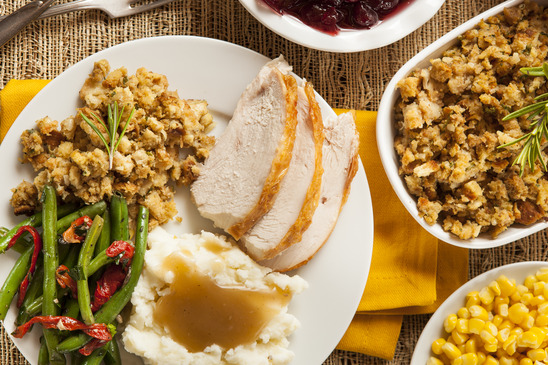
Thanksgiving will usher in the holiday season of special foods and family gatherings, so now is a good time to prepare for those occasions. Having a strategy in place will help you maintain good blood glucose control.

Many people with diabetes struggle with their choices during the holidays, when they attend more public or family gatherings that revolve around indulgent food. It’s okay to plan for higher sugar foods, but it’s also a good idea to offer to bring a healthy dish, or an alternative dessert.

Talk to your diabetes educator about adjustments in insulin or activity in order to manage splurges. These options allow you to enjoy a sweet treat, while contributing less carbohydrate to your diet:

  • Whenever possible, volunteer to bring a dish, snack, or dessert that you know you can enjoy without going overboard.
  • Use nonnutritive sweeteners, such as sucralose, to replace sugar in baked goods.
  • Enjoying a calorie-free diet beverage, for instance, has no impact on blood sugar. 
  • Substituting sugar-free pudding mix into a pie recipe can significantly reduce the total carbohydrate, as can substituting the sugar in your favorite confections with a low calorie sweetener (such as Stevia).
  • Serve or bring low-sugar alternatives to gatherings. Offer low glycemic snacks that everyone will enjoy such as nuts or a homemade trail mix.
  • This no-sugar cheesecake is a crowd-pleaser that won’t send your blood sugar soaring.
  • For parties, include a crudité platter of raw carrots, celery, olives, cucumber slices or other veggie to use as a vehicle for dips instead of chips.
  • Enjoy a special coffee, like a Pumpkin Latte by either requesting sugar-free syrup, or making your own
  • Be a gracious hostess and mix up a diabetes-friendly holiday punch. Even guests without diabetes will appreciate having a lower calorie, lower sugar beverage to choose from.
  • If you do include sweets made with caloric sweeteners, be sure to count them as part of your calorie budget. Also, keep in mind that even though replacing sugars with low calorie sweeteners will reduce the glycemic effect, you still need consider the calories or total carbohydrate of a food or dish.
  • Limit your alcohol intake to 1-2 drinks. Enjoy calorie-free options such as diet soda, club soda or a no-calorie seltzer in between drinks, or in place of alcohol.
  • If you know you’re going to attend or host a holiday or celebration and be tempted by indulgent food, schedule a workout earlier that day.
  • Be aware of portion sizes. Simply cutting back on portions will help you manage blood sugar. Instead of taking a larger portion of a favorite side dish, make an effort to enjoy smaller portions (and, avoid second helpings).

Be Realistic

We see a lot of extremes being promoted when it comes to diets these days. Only people who have diabetes truly understand what it’s like to have diabetes. Seek support, be realistic with your goals, and don’t be too hard on yourself. (Check in annually with your certified diabetes educator or endocrinologist as needed). If your blood sugar is higher than usual after a holiday meal, or a vacation day, don’t panic or get down on yourself.

Getting off track isn’t the end of the world, but getting back on track is important. If you overeat, continue to check your blood sugar, remind yourself of your daily routine, and focus on getting back under control. You can still enjoy the holiday season, allow a few treats, and stay on track as long as you stay active, have a plan, and be kind to yourself.

Rosanne Rust MS, RDN, LDN is a registered, licensed dietitian-nutritionist with over 25 years experience. As a Nutrition Communications Consultant  she delivers clear messages helping you understand the science of nutrition so you can enjoy eating for better health. Rosanne is the co-author of several books, including DASH Diet For Dummies® and the The Glycemic Index Cookbook For Dummies®. A wife, and mother of 3 boys, she practices what she preaches, enjoying regular exercise, good food and festive entertaining. Follow her on Twitter @RustNutrition.


A Study on the Relationship between Type 2 Diabetes and Taste Function in Patients with Good Glycemic Control

Posted by & filed under Health Care Professionals, Health Professionals, Sweet Taste.

CITATION & LINK: Nutrients, 2020; 12(4), 1112

AUTHORS: Sofia Pugnaloni, Sonila Alia, Margherita Mancini, Vito Santoro, Alice Di Paolo, Rosa Anna Rabini, Rosemaria Fiorini, Jacopo Sabbatinelli, Mara Fabri, Laura Mazzanti, and Arianna Vignini

REVIEWER: Robyn Flipse, MS, MA, RDN

OBJECTIVE:

  • To investigate a possible link between diabetes and individual taste function
  • The present study was designed to determine taste function in 32 subjects with Type 2 Diabetes (T2DM) with good metabolic control and no complications, and to evaluate the possible influence of age, gender, disease duration, and severity compared to 32 matched controls without T2DM. 

BACKGROUND:

  • Taste perception and food preferences have a significant impact on dietary patterns and the likelihood of identifying and consuming foods containing key nutrients. An impairment in taste perception could influence choices towards less healthy foods or unbalanced diets which could negatively impact health. 
  • If individuals with T2DM have impaired taste perception for sweet foods, it could lead them to overconsume these foods to obtain the same taste sensation as people with normal sweet taste perception.

METHODS:

  • A taste test was performed using cotton pads soaked with four different concentrations of sodium chloride, citric acid, sucrose, and quinine hydrochloride, plus pure rapeseed oil and water to represent fat or a neutral taste. A total of 18 samples were applied alternately to the left and right side of the back third of the protruded tongue in a randomized order for the four concentrations of each solution and the oil and water.
  • Subjects had to identify the taste by choosing from a list that included eight descriptions: sweet, salty, bitter, sour, water, fat, nothing, I don’t know.

FINDINGS:

  • There were significant differences between the two groups in the ability to recognize each stimuli except fat.
  • Subjects with T2DM had lower overall taste discrimination and an age-related decline in taste function.
  • The reduction in taste function associated with T2DM was not related to gender, disease duration, and glycemic control.  
  • Taste function was equivalent on the left and right sides of the tongue.

CONCLUSIONS:

  • It can be hypothesized that the decrease in sweet taste function in T2DM patients can lead to a deterioration of glycemic control and increased risk of complications. This information can be used in dietary counseling for people with T2DM to provide better options to satisfy the desire for sweet taste without increasing the consumption of simple sugars.

POINTS TO CONSIDER:

  • People with T2DM having difficulty maintaining good glycemic control may be less able to perceive sweet taste and overconsume foods and drinks containing added sugars in an attempt to reach a desired level of sweetness.
  • Foods and drinks sweetened with no- and low-calorie sweeteners offer people with T2DM a way to experience the sweet taste they desire without interfering with glycemic control. 

Calories & Fat in Popular Holiday Dishes

Posted by & filed under Recipes, Thanksgiving.

This list will give you an idea of how many calories and grams of fat are in popular holiday dishes, demonstrating why the average person gains weight over the holiday season! A typical holiday dinner alone can carry a load of 3,000 calories. But it doesn’t have to be that way. Here is an assortment of recipes for a lighter holiday menu.

APPETIZERS/DIPS/SNACKS

Food ItemServing SizeCaloriesFat Grams
Olives (green)1/2 cup778g
Cheeseball (w/ nuts)2 Tbsp24620g
Mixed Nuts1/2 cup40735g
Crackers101777g
Potato Chips (regular)1 oz. (10 chips)15010g
Potato Chips (fat-free)1 oz. (10 chips)750g
Tortilla Chips (regular)10 chips1407g
Tortilla Chips (fat-free)10 chips901g
Onion Dip2 Tbsp.605g
Ranch Dip2 Tbsp.706g
Popcorn (microwave, w/oil)2 cups1408g

SOUPS

Food ItemServing SizeCaloriesFat Grams
Oyster Stew1 cup21213g
Mushroom Soup (w/beef broth)1 cup854g

MAIN DISHES

Food ItemServing SizeCaloriesFat Grams
Roasted Turkey (no skin)4 slices (4 oz.)1906g
Baked Ham (fresh, cooked)3 slices (4 oz.)34521g
Beef Brisket (cooked, lean)3 slices (4 oz.)29115g
Beef Pot Roast3 slices (4 oz.)38727g
Rib Roast3 slices (4 oz.)33621g
Steak (broiled, lean)1 medium (5.5 oz.)31013g

SIDE DISHES

Food ItemServing SizeCaloriesFat Grams
Cornbread1 square1525g
Biscuit1 2″ roll1065g
Crescent Roll11006g
Cornbread Stuffing1 cup36318g
Bread Stuffing1 cup35517g
Giblet Gravy (w/milk and flour)1/2 cup17813g
Pearl Onions (w/cream)1 cup31618g
Sweet Potato Casserole1 cup2766g
Mashed Potatoes1 cup2388g
Green Bean Casserole1 cup1438g
Squash Casserole1 cup1585g
Vegetables (raw)1 cup200g
Collard Greens (cooked)1 cup350g
Black Eyed Peas1 cup1961g
Red Cabbage (cooked)1 cup320g
Carrots (glazed)1 cup21712g
Cranberry Sauce1/2 cup2090g
Turnip Greens1 cup290g
Waldorf Salad1 cup19213g
Carrot-Raisin Salad1 cup41930g
Cranberry/Walnut Salad1 cup34812g
Potato Salad1 cup27715g

BEVERAGES

Food ItemServing SizeCaloriesFat Grams
Eggnog (w/whole milk and alcohol)1 cup43919g
Eggnog (w/o alcohol)1 cup34219g
Wine (dry, red or white)7 oz.1420g
Wine (lite)7 oz.1020g
Wine Spritzer7 oz.910g
Beer12 oz.1480g
Beer (lite)12 oz.1010g
Cranberry Juice Cocktail1 cup1400g
Apple Juice/Cider1 cup1170g
Tea (Sweet)1 cup370g

DESSERTS

Food ItemServing SizeCaloriesFat Grams
Cheesecake1/12 of 9″ cake41225g
Apple Crisp1 cup4029g
Pumpkin Pie (w/o whipped cream)1/8 of 9″ pie32315g
Apple Pie1/8 of 9″ pie35617g
Pecan Pie1/8 of 9″ pie45621g
Mince Pie1/8 of 9″ pie43416g
Sweet Potato Pie1/8 of 9″ pie29514g
Coconut Cream Pie1/8 of 9″ pie42924g
Ice Cream (regular, vanilla)1 cup26715g
Bread Pudding1 cup31110g
Rice Pudding1 cup3034g

EXTRAS

Food ItemServing SizeCaloriesFat Grams
Butter1 Tbsp.10211g
Whipped Cream2 Tbsp10311g
Whipped Topping (nondairy, frozen)1 cup23919g
Whipped Topping (nondairy, pressurized can)1 cup18416g

AND DON’T FORGET, CALORIES STILL COUNT!

  • Use sugar-free gelatin instead of regular gelatin in your favorite salad (8 versus 70 calories per 1/2 cup serving)
  • Use fat-free soup in your favorite casserole (fat-free mushroom soup has 70 calories per 1/2 cup serving vs. 120 for the regular)
  • Use chicken bouillon to simmer the celery and onions for your turkey stuffing — instead of sautéing them in butter. (one bouillon cube has 5 calories, a tablespoon of butter has 102 calories)
  • Try low-calorie cranberry juice cocktail (40 calories per 8 oz. serving) in place of the regular (140 calories).
  • Light sour cream (35 calories per 2 tablespoon serving) has about half the calories of regular sour cream (60 calories per serving). Fat-free sour cream has 25 calories per serving.
  • Fruit pie filling has 90 calories per 1/3 cup serving; the light version has 60 and the new no-sugar-added version only has 35.

This article was originally published in 2013 and evaluated for content accuracy in November 2021. 


How Can I Get More Involved and Find More Support in the Diabetes Community this Month?

Posted by & filed under Diabetes/Blood Sugar Management.

Diabetes may not always be preventable, but there are many tools that people with diabetes can use to manage their condition and maximize their quality of life. In the era of information, there are countless online resources to access nutrition information, education and connections with others impacted by the disease. Further, there is a myriad of low and no-sugar products available, allowing people with diabetes to enjoy the foods and beverages they love while managing their blood sugar levels. CCC encourages all those impacted by diabetes to take advantage of their modern day “toolkit” of support and helpful resources offered from healthcare practitioners, family and friends, diabetes organizations, and the low- and no- calorie sweeteners industry.

  • For information, research, and advocacy opportunities for all those impacted by diabetes in the United States, search the American Diabetes Association website.
  • For newly diagnosed children, teens, and adults with type 1 diabetes, JDRF (formerly the Juvenile Diabetes Research Foundation) provides resources, advocacy, and
  • For healthcare professionals or others looking for specialized education tools and resources for those living with diabetes and their caretakers, check out the American Association of Diabetes Educators website.
  • For more information on the global impact and opportunities that exist in the worldwide fight against diabetes, search the International Diabetes Federation website.

What Steps Can I Take to Prevent or Manage Diabetes Through Diet?

Posted by & filed under Diabetes/Blood Sugar Management.

Blood glucose is primarily impacted by the carbohydrates in the foods and beverages consumed. Here are some steps to help prevent and manage diabetes through the diet.

  • As a first step, understand what carbohydrates are and where they are most commonly found.
  • Next, learn how to count carbohydrates. This entails counting the number of grams of carbohydrates in a meal and matching that to your dose of insulin.
  • More broadly, understand how to make sense of Nutrition Facts labels and make informed dietary decisions.
  • Strategize and execute your eating plans. This could mean looking up recipes with nutrition information needed to count carbohydrates, meal planning to help time your meals to keep blood sugars balanced, or seeking out smart substitutions to prevent blood glucose spikes, such as replacing sweetened foods and beverages with low- and no-sugar alternatives.
  • The inclusion of naturally high fiber or fiber-enriched foods in your diet could aid in the management of blood glucose levels, as they have been shown to slow the absorption of carbohydrates. As a result, the rise in post-meal glucose and insulin levels are minimized.
  • Take advantage of online tools such as CCC’s Food Calorie Calculator, which allows users to choose from thousands of foods and brands, and see nutrition facts including calories and carbohydrates.
  • Understand that there are more options than ever before for foods and beverages often labeled as “lite”, “reduced-calorie”, “reduced-sugar”, or “diet” that can help you minimize spikes in blood glucose levels. Those products are typically sweetened with low- or no-calorie sweeteners (LNCS). Learn more about utilize LNCS to manage diabetes here.

faq2Do you have questions about low-calorie sweeteners? Want to learn more about maintaining a healthy lifestyle? You asked and we listened. Our resident Registered Dietitians answered the most popular questions about low-calorie sweeteners.

Media Contacts

For media inquiries please reach out to any of the below contacts: