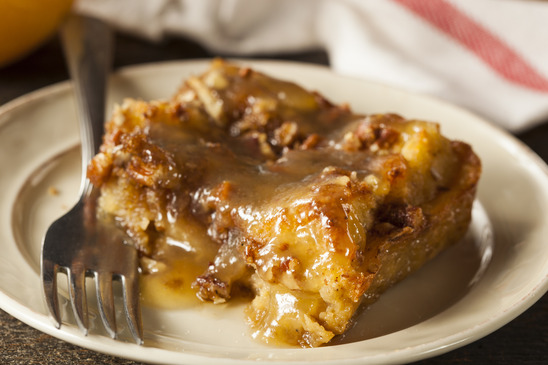
Bourbon-Spiked Pumpkin Pecan Bundt Cake

Posted by & filed under Bread, Desserts, Recipes, Stevia.

Makes 12 Servings

Ingredients

Cake

1 cup brown sugar
1/2 cup Stevia In The Raw®
1 cup canola oil
3 large eggs
1 can 100% pure pumpkin (15-oz.)
3 cups all-purpose flour
1 tablespoon pumpkin pie spice
2 teaspoon baking powder

Sauce

1 cup caramel ice cream topping
2 tablespoon bourbon or apple juice
1/2 cup chopped pecans

Directions

Heat oven to 325°F. Spray 12-cup bundt pan with cooking spray. Beat brown sugar, Stevia In The Raw®, oil and eggs until combined. Beat in pumpkin. Add flour, pumpkin pie spice and baking powder; beat on LOW just until mixed. Pour into prepared pan.

Bake 60 to 70 minutes until toothpick inserted in center comes out clean. Let stand 15 minutes. Run knife around sides of pan to loosen cake; remove from pan to wire rack. Cool completely, about 1 hour.

Meanwhile, combine caramel and bourbon in a small bowl. Drizzle over cooled cake and sprinkle with pecans.

Nutritional Information

Calories 460
Total Fat 24g
Carbohydrates 60g
Protein 6g
Dietary Fiber 3g
Sodium 190mg
Sugars 18g

Recipe originally appeared on InTheRaw.com.

The post Bourbon-Spiked Pumpkin Pecan Bundt Cake appeared first on Steviabenefits.org.


Fructose Intake and Risk of Gout and Hyperuricemia

Posted by & filed under Fructose, Health Professionals, Research Summaries.

A recent systematic review and meta-analysis from The BMJ attempts to define a relationship between fructose intake and the development of gout and hyperuricemia. Researchers were only able to identify two prospective cohort studies which met their selection criteria; both of which pertained to fructose intake and gout but did not address incidence of hyperuricemia. One study was conducted in male health professionals aged 40 to 75 years and the second was conducted in female nurses aged 30 to 55 years.  In both studies, dietary intakes were assessed via food frequency questionnaire and medical history and incidence of gout were self-reported. Adjustments to the statistical model were made for the following factors: BMI, age, total energy intake, alcohol consumption, diuretic use, history of hypertension, history of renal failure, menopause status, use of hormone therapy, caffeine intake, total vitamin C, and percentage of energy from total carbohydrates.

It was noted that the median fructose intake was ~7.2% of total energy intake in the lowest quantiles and ~11.9% in the highest quantiles. The main sources of dietary fructose were orange juice, sugar sweetened beverages, apples, raisins, and oranges.  When using the most-adjusted model, researchers found “a significant overall association between fructose intake and increased risk of incident gout with a pooled RR of 1.62 (95% CI 1.28 to 2.03) with no evidence of significant interstudy heterogeneity…This model allows for the effects of fructose compared with isocaloric exchange for other carbohydrates to be estimated.”  Researchers conclude “The results of our pooled analysis indicated that total fructose consumption was positively associated with an increased risk of developing gout by 62% when comparing extreme quantiles of fructose intake.”

Points of Consideration

Researchers highlight a number of limitations to their analysis. While the number of participants was high (n=125,999) the participants were recruited for two studies that were limited to health care workers in the USA. Moreover, one study reported that its male participants were predominantly Caucasian. Together, these factors contribute to low generalizability. Furthermore, because there were only two studies utilized in this analysis, researchers were unable to assess publication bias or perform sensitivity. Lastly, because both of the studies examined were observational, no cause and effect relationship can be determined.

The post Fructose Intake and Risk of Gout and Hyperuricemia appeared first on FructoseFacts.


Making Sense of Sugar

Posted by & filed under Fructose, Lifestyle Articles.

The three main types of carbohydrate in food are starches (also known as complex carbohydrates), sugars, and fiber. As one of the three types of carbohydrates, sugars are in many of the foods and beverages we consume every day. But over the past decade sugars have become a hot-button issue. It seems like every time you look at news headlines or magazines, someone is touting the benefits of a low carbohydrate diet and suggesting sugar should be avoided. But how much of that is actually true?

When you think of sugar, you probably picture the white powder in the sugar bowl. This substance, often called table sugar, is sucrose and is just one of the sugars.

In fact, there are several types of sugar. The term “sugar” is an overarching term for the six different forms: glucose, fructose, galactose, sucrose, lactose and maltose. Sugars are divided into two categories: monosaccharides (glucose, fructose and galactose) and disaccharides (sucrose, lactose and maltose). Monosaccharides are the simplest version of sugars and are the building blocks of disaccharides.

The monosaccharide glucose is the body’s primary energy source. In fact, the brain requires around 130g of glucose each day to cover basic energy needs. Consuming carbohydrates, including sugar, provides your body with essential energy. Glucose is most often found in the diet as part of a disaccharide like sucrose (glucose + fructose) or lactose (glucose + galactose). It is also found in its monosaccharide form in combination with other monosaccharides. For example, honey is composed of one part fructose and one part glucose. Fruits and vegetables are also made of a combination of fructose and glucose. For example, 1 cup of baked sweet potato contains approximately 13 grams of sugar that is roughly 3 teaspoons of table sugar or over 1 tablespoon of powdered fructose sweetener.

Many headlines suggest that sugar and carbohydrates from certain foods are acceptable and others are not. While the body can recognize the difference among different sugars, it does not distinguish the original source of the sugar after it is absorbed.

What do organizations have to say?

According to the USDA Dietary Guidelines for Americans, between 45 and 65 percent of daily calories for all age groups should come from carbohydrates, which includes fibers, starches, and sugars. However, it appears that many Americans are not consuming enough fiber and may be consuming excess sugar. To help Americans make dietary changes, a variety of organizations have issued guidance on added sugars. The American Heart Association (AHA) recommends limiting sugar intake to 6 teaspoons for women and 9 teaspoons for men per day. That’s equivalent to 100 calories for women and 150 calories for men a day. The World Health Organization (WHO) advises both adults and children to reduce the intake of sugars to less than 10 percent of total daily caloric intake. For the average adult, that equals about 200 calories or less a day from added sugars. If you are looking to reduce your intake of added sugars, low-calorie sweeteners can provide sweetness without the sugar or calories.

The Bottom Line

Balancing your carbohydrate, fats and proteins is the only way to ensure you are consuming a healthful diet. An easy way to assess your sugar intake is to track your intake using the use the MyPlate app.


The post Making Sense of Sugar appeared first on FructoseFacts.


Pumpkin Bread Pudding

Posted by & filed under Desserts, Recipes, Stevia.

Makes 4 Servings

Ingredients

3 cups French bread, cubed
2/3 cup 1% low fat milk
1/4 cup canned pumpkin
1 egg
1 egg white
8 packets SPLENDA® Naturals Stevia Sweetener
1/4 teaspoon pumpkin pie spice
1/4 teaspoon ground cinnamon
1 teaspoon vanilla extract
2 teaspoons chopped pecans

Directions

Preheat oven to 350 degrees F. Spray four (4 oz) ramekins with nonstick cooking spray. Set aside until ready to use.

Cut bread into one-inch cubes. Set aside.

Mix milk, pumpkin, egg, egg white, SPLENDA® Naturals Stevia Sweetener, spices, and vanilla extract together in a medium-sized mixing bowl. Add bread chunks and stir until bread is coated. Allow bread to soak up moisture for 10-15 minutes.

Spoon bread pudding into the prepared ramekins. Top with chopped pecans. Place ramekins on a cookie sheet and cover with foil. Bake for 10 minutes. Remove foil and bake another 10-15 minutes or until firm to the touch. Serve warm or chilled.

Nutritional Information

Calories 130
Total Fat 0g
Cholesterol 50mg
Sodium 220mg
Carbohydrates 23g
Dietary Fiber 1g
Sugars 4g
Protein 7g

Recipe originally appeared on Splenda.com.

The post Pumpkin Bread Pudding appeared first on Steviabenefits.org.


Fructose Intake and Risk of Gout and Hyperuricemia, Systematic Review and Meta-analysis

Posted by & filed under Fructose, Health Professionals, Research Summaries.

A recent systematic review and meta-analysis from The BMJ attempts to define a relationship between fructose intake and the development of gout and hyperuricemia. Researchers were only able to identify two prospective cohort studies which met their selection criteria; both of which pertained to fructose intake and gout but did not address incidence of hyperuricemia. One study was conducted in male health professionals aged 40 to 75 years and the second was conducted in female nurses aged 30 to 55 years.  In both studies, dietary intakes were assessed via food frequency questionnaire and medical history and incidence of gout were self-reported. Adjustments to the statistical model were made for the following factors: BMI, age, total energy intake, alcohol consumption, diuretic use, history of hypertension, history of renal failure, menopause status, use of hormone therapy, caffeine intake, total vitamin C, and percentage of energy from total carbohydrates.

It was noted that the median fructose intake was ~7.2% of total energy intake in the lowest quantiles and ~11.9% in the highest quantiles. The main sources of dietary fructose were orange juice, sugar sweetened beverages, apples, raisins, and oranges.  When using the most-adjusted model, researchers found “a significant overall association between fructose intake and increased risk of incident gout with a pooled RR of 1.62 (95% CI 1.28 to 2.03) with no evidence of significant interstudy heterogeneity…This model allows for the effects of fructose compared with isocaloric exchange for other carbohydrates to be estimated.”  Researchers conclude “The results of our pooled analysis indicated that total fructose consumption was positively associated with an increased risk of developing gout by 62% when comparing extreme quantiles of fructose intake.”

The post Fructose Intake and Risk of Gout and Hyperuricemia, Systematic Review and Meta-analysis appeared first on FructoseFacts.


Keri Peterson, MD: The Relationship between Nutrition and Health

Posted by & filed under Diabetes/Blood Sugar Management, Heart Health.

Dr. Keri Peterson
Medical Advisor to the Calorie Control Council 

As a primary care physician I take care of patients for all sorts of issues.  They see me for their annual physicals where I screen them for diseases like high blood pressure, high cholesterol, arthritis and diabetes among many other medical conditions.  Practicing preventative medicine allows me to detect health issues before they become a more serious problem.  In addition, patients come to see me with whatever symptoms or ailments are troubling them.

Lifestyle plays a significant role in the development of many diseases.  Therefore, proper counseling regarding diet, nutrition and exercise is essential for both preventing and managing ones health.   Being overweight or obese contributes to many problems that patients complain to me about.

One of the most common things that I pick up is a pre-diabetic condition where the sugar levels are borderline elevated and there is a concern about developing full-fledged diabetes.  In these cases, metabolism of sugar is impaired usually due to high body mass or to a genetic predisposition.  Controlling diet and exercising are key steps in lowering blood sugar levels.  I typically recommend cutting back on carbohydrate intake by limiting sugar and starch intake in the form of full calorie beverages, pastas, breads and desserts.  One option is to replace sugar-containing beverages with low calorie sweetened ones instead.  Also, I suggest replacing simple carbohydrate foods with complex carbohydrates like swapping white bread for multi-grain bread and pasta for quinoa.

Two other issues that often go hand in hand that I see in my practice are high blood pressure and high cholesterol.  Sticking to a diet comprised of whole grains, lean proteins and healthy fats can modify cholesterol levels while reducing sodium intake can lower blood pressure. It’s also very important to exercise regularly which means 30 minutes five days a week of moderate activity.

Good nutrition and healthy eating play a vital role in staying healthy and providing tips for my patients is a critical part of my job.  Following my patients and seeing the results of their hard work is extremely gratifying for me.


About Keri Peterson, MD

Keri Peterson MDDr. Peterson is a medical contributor and columnist for Women’s Health and a frequent guest on NBC’s Today, ABC’s Good Morning America, Fox News and CNN. Based in New York City, Dr. Peterson has been in private practice since 1999 and holds appointments at Lenox Hill Hospital and Mount Sinai Medical Center.   With a BA from Cornell University and a Medical Degree from Mount Sinai School of Medicine, she completed post-graduate training in Internal Medicine at New York’s Mount Sinai Medical Center and is board certified in Internal Medicine. Dr. Peterson is a member of the American College of Physicians and the American Medical Association, and serves as medical advisor for the Calorie Control Council.


faq2Do you have questions about low-calorie sweeteners? Want to learn more about maintaining a healthy lifestyle? You asked and we listened. Our resident Registered Dietitians answered the most popular questions about low-calorie sweeteners.

Media Contacts

For media inquiries please reach out to any of the below contacts: