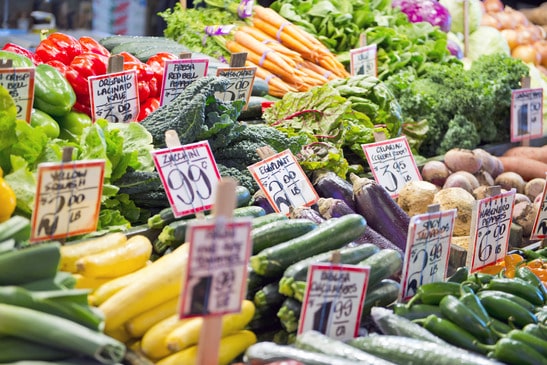
A “Fresh” Perspective on Fruits and Vegetables

Posted by & filed under Featured, Lifestyle Articles, Sucralose.

By: Melissa Joy Dobbins, MS, RDN, CDE —

Despite all the nutrition controversy in the media touting different diets and food folklore, I am pretty confident we can all agree on one thing: most people need to eat more fruits and vegetables. In fact, according to the CDC, only 1 in 10 Americans eats enough fruits and veggies. June is National Fresh Fruit and Vegetables Month so it’s a great time to remind everyone to eat more produce. But I believe we need more than just a reminder. Although most people are aware of the need for more fruits and vegetables, the numbers don’t lie. Why are we still not getting enough? (Note: If you’re wondering what “enough” means, the 2015-2020 Dietary Guidelines recommends 2 ½-cup equivalents of vegetables and 2-cup equivalents of fruits per day for a 2000 calorie level in the Healthy U.S.-Style Eating Pattern).

As a registered dietitian for over 20 years, I am very familiar with the many barriers to achieving this goal. Here are some of the most common barriers I’ve heard and some solutions:

  1. The “fresh is best” mantra causes people to assume that only fresh produce “counts” when in fact dried, canned, frozen and 100% juices can provide excellent nutrition for less money and more convenience, making it easier to increase your intake.
  2. Fresh produce costs more. However, you can look for sales and in-season produce which is typically less expensive, and tastes better, too!
  3. What about organic? Organic also tends to cost more, but research shows the nutrition content is essentially the same, so you don’t need to worry about choosing “regular” produce. You’re getting safe, nutritious produce without the higher price tag.
  4. If you’re really concerned about saving money, don’t discount the hidden cost of food waste. Did you know that 30-50% of the food that makes it to the supermarket is thrown away in homes of people who purchase it? Is your produce hidden away in the crisper drawer where it gets forgotten and gets rotten? Place those beautiful fruits and vegetables on a top or middle shelf in clear containers so you can see them and use them before they go bad. Check out my video on Healthy & Affordable Food Tips.

As a wife and a mom of two kids, I rely on my pantry and freezer to round out my fresh produce. My Veggie Challenge Pinterest board is where I pin inspirational tips and recipes for squeezing more vegetables into my family’s diet, and here are two recipes to help you enjoy more fruits and vegetables this week: Pineapple Yogurt Dip and Roasted Red Pepper Cheese Spread.

Melissa Joy Dobbins, MS, RDN, CDE is a nationally recognized registered dietitian nutritionist with more than 20 years’ experience helping people enjoy their food with health in mind. Melissa is a certified diabetes educator, a former supermarket dietitian, and also a former national media spokesperson for the Academy of Nutrition and Dietetics (AND). She was named Outstanding Dietitian of the Year in Illinois by AND and Outstanding Diabetes Educator of the Year in Chicago by the American Association of Diabetes Educators. Melissa is a paid contributor to Sucralose.org. Melissa is the CEO of Sound Bites, Inc. based in Chicago, Illinois, and you can connect with her on Twitter (@MelissaJoyRD), Pinterest, Facebook, and check out her blog at SoundBitesRD.com.

The post A “Fresh” Perspective on Fruits and Vegetables appeared first on Sucralose.


Celebrate National Ice Cream Month

Posted by & filed under Aspartame, Featured, Lifestyle Articles, Summer.

By: Jen Haugen RD, LD —
Scorching summer days call for frosty ice cream nights. There’s nothing better on a warm summer evening, especially after a few hours of mowing the lawn, pulling weeds out of the garden or an afternoon of baseball or swimming. It doesn’t matter if the vanilla bean ice cream or the rich chocolate ice cream makes an appearance in the cone or dish, what does matter are the toppings that are pulled out to go with it.You can find restaurants devoted just to ice cream and an array of toppings pretty easily. Why not take that idea and try it at home? An ice cream sundae bar is the perfect after dinner dessert and it’s a simple entertaining idea for inviting the neighbors over for an impromptu get together. Here’s the scoop:

Start with Vanilla or Chocolate Ice Cream

While these flavors seem boring and bland, simple options like vanilla and chocolate go with pretty much any topping allowing the toppings to shine through . No need to stock up on multiple flavors taking precious freezer space. The basics work just fine!

Drizzle on the Toppings

Here’s a quick tip to save calories. Purchase toppings that are sweetened with low calorie sweeteners, like aspartame, to reduce calories and carbohydrates allowing everyone to enjoy their dessert whether they are watching their weight or managing diabetes or simply just want to reduce sugar intake. Sugar-free sauces like hot fudge, caramel and strawberry are all easy to find in supermarkets and have on hand. And when you compare calories of regular versus sugar-free options, you are saving, on average, 30% per tablespoon while reducing carbohydrates significantly as well.

Fill Bowls of Berries

How do you get the kids to eat more fruit? Incorporate those berries into something they already love – ice cream! Blueberries, strawberries, raspberries…whatever you have, put some into small dishes to let everyone help themselves.

Look for the Crunch

Open the pantry cabinet and you might find baking chips, mini candy-coated candies, like M&M’s, and cookies, like Oreo’s, that would make the perfect crunchy ice cream toppings. Or you may even have a candy bar or two that can be quickly chopped. The number of choices is key here as it’s easy to become overwhelmed. Aim for two or three options.

Bring out the dishes and the spoons and serve up this fun ice cream sundae bar!

Whether it’s for friends or family, entertaining with a quick ice cream sundae bar is the perfect finisher to an outdoor party, a neighborhood gathering or after family dinner. It’s really the easiest entertaining you will ever do!


Jen Haugen RD, LD is an award winning registered dietitian based in Austin, MN. She is currently writing her first book, focusing on growing healthier families through gardening and cooking together. She is also a media expert frequently appearing on ABC 6 News . In 2012, Jen was named Emerging Dietetic Leader in Minnesota by the Academy of Nutrition and Dietetics. She continues to be a leader in her field with her supermarket and media expertise, garden program development and nutrition experience. Reach Jen on Twitter @JenHaugen and check out her blog JenHaugen.com.

The post Celebrate National Ice Cream Month appeared first on Aspartame.


Respect the Fruit: Three Important Reasons to Plan More Fruit in Your Diet

Posted by & filed under Featured, Fructose, Lifestyle Articles.

By: Ellen Stokes, MS, RD, LD —

As a registered dietitian and nutrition educator, I find that fruit often doesn’t get the nutritional respect it deserves.  Maybe that’s because fruit is called “Nature’s Candy” or because it’s found in many calorie-laden desserts like Strawberry Shortcake, Apple Pie, or Banana Pudding.

But, fattening desserts are only part of fruit’s resume.  Consuming fruit has many health benefits . Here are three that may surprise you:

Fruit is Ranked Much Higher in Antioxidants than Vegetables (yes, vegetables!)

An anti-oxidant can combine chemically with the destructive forms of oxygen in our bodies to render them harmless.  Research supports a link between the consumption of anti-oxidant-rich foods and a lower risk of certain cancers and heart disease.  When USDA scientists tested dozens of foods to determine their anti-oxidant capacities, 15 fruits and only 1 vegetable made the top 20 list.  The highest-ranked fruits were not costly, exotic varieties either — the top performers included apples, plums, blackberries, blueberries, and pears.

Choosing Whole fruits Satisfies a Sweet Tooth while Keeping Blood Sugars in Better Control

Fructose is a sugar naturally found in fruits and vegetables.  Because fructose is the sweetest-tasting of all natural sugars, a smaller amount has a bigger impact on our taste buds than other natural sugars. Fructose is also low on the glycemic index (GI). That means it won’t raise your blood sugar levels as fast or as high as glucose or sucrose will. Whole fruits contain fiber which means they are digested more slowly which also keeps blood sugars from rising too quickly.  Whole fruits like apples, oranges, peaches, and pears are good low-GI choices.

Consuming Raw Fruit Could Help Lower Your Blood Pressure

While consuming high-sodium foods can raise blood pressure, consuming potassium-rich foods can help lower blood pressure. Controlling blood pressure contributes to a healthier cardiovascular system and a decreased risk of kidney failure. Fruits and vegetables are naturally low in sodium and most are good-to-excellent sources of potassium.  However, when most fruits are eaten they are likely to have a much higher potassium content than most vegetables. That’s because fruits are usually eaten raw and often vegetables are not.  Cooking, particularly in boiling water, can greatly reduce a food’s potassium content.

As with all foods, fruits should be consumed in moderation.  The USDA recommends about 1.5 cups of fruit per day for women and 2 cups of fruit per day for men.  Examples of 1 cup servings include 2 large plums; 1 small apple; or a large banana.  For more information on appropriate serving sizes:  please go to the USDA’s site.


Ellen Stokes, MS, RD, LD is an award-winning video producer, director, and writer in addition to being a registered dietitian. Ellen writes and creates videos about nutrition education, food safety, menu planning, grocery shopping, and healthful cooking on a budget. Ellen has worked with organizations and companies including WebMD, the Partnership for Food Safety Education, and the University of Georgia Food Science Department. Ellen formerly worked for CNN as a writer and producer and teaches food safety and nutrition for Georgia State University. Check her out on Twitter @EllenS_RD.
The post Respect the Fruit: Three Important Reasons to Plan More Fruit in Your Diet appeared first on FructoseFacts.


Low Calorie Sweeteners Are Safe and Do Not Increase Your Risk of Having A Stroke

Posted by & filed under Health Professionals, Heart Health.

By Keith Ayoob, EdD

As a clinician of some 30+ years, I doubt I’ve seen a nutrition issue more polarizing than that of low-and no- calorie sweeteners (LNCS). 

You may have read sensational headlines about these sweeteners.  You should also be hearing about their benefits, but alas, good news never sells. 

Example: a recent study in the journal Stroke looked at the “association” between LNCS-containing beverages and the risk of stroke, coronary heart disease and “all-cause mortality”, the latter meaning essentially death for any reason at all.

The study focused on the consumption of artificially-sweetened beverages (ASBs) in over 82,000 women who were part of the Women’s Health Initiative Observational Study (WHIOS).  The women were enrolled quite a while ago, between 1993 and 1998, then followed for 12 years.  They reported their ASB intake only ONCE – 3 years after their initial enrollment.

This study is “observational”, as no intervention was involved.  Studies like the WHIOS generate huge databases, are relatively easy to do and don’t tend to cost much, given the number of research publications they can produce. However, this kind of data also has serious limitations (think “fine print”) to it.  Read on.              

The authors acknowledged the following limitations of the study:

  • Though the authors note that this type of study is incapable of showing a cause-and-effect relationship, still, they tend to draw very specific conclusions from very generalized data.  Observational studies are only able to generate a hypothesis, even if headlines suggest otherwise.
  • Since the intake of ASBs was recorded only once and was self-reported, it cannot be validated.  It should also be noted that diet quality was also taken at the time of enrollment and was not assessed again during the 12-year follow-up period.
  • The authors noted that women with a higher intake of ASBs “may have differed systematically” from women with little or no intake, “since they were more likely to be obese and have a higher energy intake.” The authors acknowledged that they may have been components of their diets that were not accounted for by the diet quality measure utilized in the study. 
  • The ASB intake assessment did not consider the use of LNCS in coffee, tea, or foods.  Therefore, subjects who are simply not soda drinkers and may use LNCS in their hot beverages, or eat sugar-reduced foods such as “lite” yogurt were not captured in this study.

How likely is it that your current health status is a result of what you usually ate on a typical Wednesday, 12 years ago?  The authors felt that, in weight-stable older women, “the likelihood of changes in dietary patterns is likely low.” 

That’s a big assumption.  Stable weight does not indicate a stable intake of calories, as activity levels and metabolisms often decline over time.  It also doesn’t indicate a stable dietary quality.  People move, jobs change, life happens, and this often impacts our eating style, none of which can be accounted for by this study.

Reverse Causality

This is the concept that people at higher risk for stroke and cardiovascular disease may be more likely to choose to drink ASBs.  Conditions like stroke and heart disease build for years with few or no symptoms.  People drinking the most ASBs were also the LEAST likely to be physically active.  While being sedentary increases the likelihood of all the health risks measured, these individuals may be inactive due to health issues that were not accounted for. 

The Good News and There’s Plenty of It

Controlled intervention studies produce higher quality evidence.  A comprehensive review (Rogers, et al., 2016) of such studies has shown significant benefits from the use of low- and no-calorie sweeteners (LNCS):

  • Total calorie intake and body weight are reduced with the use of LNCS when used in place of at least some sugar.
  • Use of LNCS does NOT increase desire for sweet foods. 
  • No evidence that the use of LNCS undermines weight loss efforts.

It is well-known that healthy weight loss can reduce the risk of cardiovascular disease and stroke.  But, should we place the burden of achieving weight loss and other positive health outcomes on the use or non-use of ASBs?  That seems inappropriate because they were never developed for that purpose.  They have been a lifesaver for diabetics, most certainly, helping them control blood glucose levels while having a satisfactory eating style that helps them feel less deprived.  Indeed, it is accepted that all LNCS have no effect on blood glucose levels and, if used in place of a sugar-sweetened beverage (an ideal use) can help prevent rises in blood glucose levels. 

Careful Spending of Sugar Calories

For diabetics and non-diabetics, LNCS are a tool.  Like every tool, and every food, for that matter, they need to be used wisely.  The real question to anyone considering using LNCS is: How will you, as an individual, not a population, use them?  You can decide if ASBs will be an asset to your eating style.  When I have clinic visits with obese patients who want to lose weight, or just spend fewer calories on sugar, I always go over where their dietary sources of excess calories are.  If they eat a lot of added sugars, these are easy places to focus their efforts.  A simple swap of a calorie-free drink for their usual soda has BEEN SHOWN to reduce total calorie intake.

The lead author states, “We can’t assume these diet drinks are harmless, especially when consumed at high levels,” which is confusing to consumers.  Can we assume ANYTHING, even foods like kale and garbanzo beans, are harmless when consumed at high levels?  Of course not.  On the other hand, more reliable evidence has shown us they can be a beneficial tool.

Finally, my own pet peeve about the potential damage of these observational studies: Since they are not capable of showing cause-and-effect, why do headlines imply there is one?   Such implications are incorrect, irresponsible and are misleading to consumers.

References:

Rogers PJ, Hogenkamp PS, de Graaf C, et al. Does low-energy sweetener consumption affect energy intake and body weight? A systematic review, including meta-analyses, of the evidence from human and animal studies. Int J Obes (Lond). 2016;40(3):381–394. doi:10.1038/ijo.2015.177

About Dr. Keith Ayoob

Keith Ayoob, EdD, RDN, FAND is an Associate Clinical Professor Emeritus at the Albert Einstein College of Medicine. As a pediatric nutritionist and registered dietitian, Dr. Ayoob is also a past national spokesperson for the Academy of Nutrition and Dietetics.

Dr. Ayoob is a consultant with the Calorie Control Council Advisory Board and the Global Stevia Institute (GSI), GSI is supported by PureCircle Ltd, a global leader in purified stevia leaf extract production.


How To Bridge The Fiber Gap When You’re On The Go This Summer

Posted by & filed under Featured, Fiber, Lifestyle Articles, Summer.

Summer is the season for families to be outdoors and on the go. It’s also the season of fresh fruits, vegetables and grilling that can make it easy to eat a diet higher in fiber. While most Americans only consume about half of the recommended intake, the recommendation to eat a variety of fibers means recipes and meals can be modified to help you get some of the health benefits of fiber.

In general, we are more active in the summer months, whether it’s swimming, hiking or taking long bike rides. Inevitable we are all hungry after our adventures, so having some appetizers and snacks that are prepared in advance come in handy when we are on the go. A granola bar or granola mix makes a great filling and portable snack. Fresh fruits and vegetables are really easy to slice and store in the cooler. Seasonal fruits will be plentiful and tasty, and will also provide some fiber to help you reach the recommend intake value of 25 grams per day for women or 38 grams per day for men. (To help track your fiber intake use this food calculator.) Dips are always a favorite, so consider using a yogurt with added fiber to make a yogurt dip, like this Pineapple Yogurt Dip. Bean dips and hummus complement vegetables, and are another way to increase fiber while offering something creamy.

When it comes to grilling, try adding quick cooking oats, pureed onions, garlic and mushrooms to your meat of choice to help your burgers stay juicy. Mixing everything together the day before not only saves times, but also helps the flavor of the burgers develop. There are some great recipes for bean burgers that are a vegetarian-friendly option packed with fiber. Regardless of whether you are a whole wheat or white bun person, the fiber content of buns can be very different so check the label.

A day of playing outside may mean you are hungry enough for sides and a dessert. Grill your favorite vegetables and add them to a salad for a quick and easy side. Anything from a German-style potato salad with grilled onions to a grilled corn salad are favorites. By dessert time, some people may be pretty full. Consider baking a reduced-calorie cobbler with crunchy topping or grilling fruits to eat with toppings or ice cream.

All of this is easy to prepare in advance, pack in a cooler with a lot of ice, and enjoy fairly quickly after you’ve been on your adventure for the day.

The post How To Bridge The Fiber Gap When You’re On The Go This Summer appeared first on Fiber Facts.


Summer Picnics

Posted by & filed under Featured, Fructose, Lifestyle Articles, Summer.

By Rosanne Rust MS, RDN, LDN  — 
I don’t know about you, but I love being outdoors in the summertime. I especially love al fresco dining. Whether you are planning a backyard barbecue, a deck party, or packing a picnic to go, I encourage you to plan a festive spread that encompasses the basic food groups as well as a dessert or treat, and includes cool beverages to quench the summer heat.

These days, you may read a lot of negative articles on various blogs or websites about sweets and fructose that may scare you into trying to avoid those foods, or worse, you may feel guilty when you do consume them. Don’t feel guilty! And don’t fear food. Foods that contain fructose, like fresh fruit, lemonade, popsicles, or fudge bars, are all fine to enjoy in moderation.

What’s moderation all about? It’s about balancing out healthy foods with the treats. So, no, you don’t want to make a meal out of s’mores and lemonade, but you can include these types of treats into your picnic plan. And, don’t forget to add some fun actives to your day – a game of backyard volleyball or kickball, jump rope for the children, swimming, wiffleball, or frisbee. (A typical ice pop has only 45 calories and 8 grams of sugar – easily run off during a game of kickball!)

Here are a few menu planning ideas for your outdoor summer entertaining that offer good nutrition and will provide a festive, fun table.

Summer Picnic Menu

Turkey Po’Boys – 6 inch crusty roll filled with deli turkey, sliced cheese, sliced tomatoes, cole slaw or lettuce leaves, pickle slices
Watermelon slices
Salad Skewers – skewer grape tomatoes, chunks of Romaine, cucumber slices, olives. Serve with Ranch dressing or your favorite dressing. These are great. Make them ahead, then pack – fun finger food!
Lemonade

Backyard Firepit

All beef hotdogs roasted on a stick over the fire
Whole wheat and white hot dog buns
Spinach salad mixed with sliced strawberries, slivered almonds, brown rice, and sweet and sour vinaigrette
S’mores (marshmallows, graham crackers, chocolate squares)
Mint-lemon infused water jug (fill water jug early in day, add fresh mint and lemon slices. Add ice when ready to serve)

Elegant Deck Party

Grilled chicken thighs and drumsticks
Grilled shrimp skewers, with sweet and sour glaze
Vegetable skewers – thread 1-inch slices of zucchini, mushrooms, onion, bell peppers. Brush with olive oil, and a sprinkle of Herbs de Provence. Grill until lightly browned
Rice pilaf
One scoop of Vanilla bean ice cream topped with fresh raspberries
Mint-infused iced tea


Rosanne Rust MS, RDN, LDN is a registered, licensed dietitian-nutritionist with over 25 years experience. As a Nutrition Communications Consultant  she delivers clear messages helping you understand the science of nutrition so you can enjoy eating for better health. Rosanne is the co-author of several books, including DASH Diet For Dummies® and the The Glycemic Index Cookbook For Dummies®. A wife, and mother of 3 boys, she practices what she preaches, enjoying regular exercise, good food and festive entertaining. Follow her on Twitter @RustNutrition.

The post Summer Picnics appeared first on FructoseFacts.


faq2Do you have questions about low-calorie sweeteners? Want to learn more about maintaining a healthy lifestyle? You asked and we listened. Our resident Registered Dietitians answered the most popular questions about low-calorie sweeteners.

Media Contacts

For media inquiries please reach out to any of the below contacts: