Protected: March 2018

Posted by & filed under Uncategorized.

Calorie Control Council Alerts

CCC’s Monthly Alert serves to inform its members of developments from the previous month concerning topics of interest to the Council. Below are highlights which cover past, current, and on-going regulatory updates, industry & consumer issues, and Council activities from March, 2018.
US Policy and Regulatory Updates
  • Commissioner Gottlieb Confirms Nutrition is a Top Priority
  • Gottlieb Announces Kickoff of FDA Nutrition Innovation Strategy
  • Trump Orders Tariffs on Steel, Aluminum Import
  • U.S. Tries to Limit Junk Food Warning Labels in NAFTA Talks
  • Beverage Industry Wants to Block Seattle Soda Tax Statewide
  • FDA Continues to Solicit Comments on Collection of Information on Calorie Labeling in Vending Machines and Nutrition Labeling of Menu Items
International Policy and Regulatory Updates
  • Thailand Revises Maximum Use Levels Permitted for Food Additives
  • Japan Decides on GE Labeling Requirements
  • New Zealand Calls Evidence that Sugar Taxes Improve Health “Weak”
  • Canada Seeks to Restrict Sale of Sweetened Alcoholic Beverages
  • Experts Say British Soda Tax May Work Better Than Others
Publication Updates
  • Study Finds Chicory Root Dietary Fiber Improves Bowel Regularity
  • Bipartisan Policy Center Recommends Cutting Sugary Drinks from SNAP
  • Study Published on Industry Tactics to Shift Conversation on Obesity Reduction
  • Analysis Highlights Stigma Caused by Taxing Sugar Sweetened Beverages
  • Study Finds Traffic Light Labels to Improve Children’s Health in Australia
  • Food Navigator Publishes Special Edition Content on Sugar Reduction and Sweeteners
  • Food Navigator to Host Free Webinar on Sweeteners and Sugar Reduction
  • Food & Drink Federation Responds to Junk Food Ad Complaints
International Policy and Regulatory Updates 
  • Singapore Looks to Sugar Substitutes to Combat Diabetes
  • Nordic Countries Publish Joint Protocol for Monitoring Child Marketing Tactics
  • Chile to Implement Final Regulations on Advertising Packaged Foods and Beverages
Council Updates 
  • CCC Attends CCFA50
  • CCC Submits Comments re: Dietary Guidelines for Americans
Communications Updates
  • General Program
  • Working Groups


US Policy and Regulatory Updates


Commissioner Gottlieb Confirms Nutrition is a Top Priority
In a March 1 U.S. Food and Drug Administration (FDA) statement, Commissioner Gottlieb stated, “I’ve made nutrition on of my top priorities” and endorsed the changes made to the Nutrition Facts label (NFL) to help consumers make more informed dietary choices. Gottlieb announced the Agency’s intent to fulfill two key components of successful implementation of the NFL: public education of the new label format and clear, detailed guidance for food manufacturers.

Further, Gottlieb specifically called out added sugars, noting, “We’ve made it our goal to increase consumer awareness of the quantity of added sugars in food products consistent with recent dietary guideline recommendations. The new label also contains the new daily value for added sugars, so consumers can better understand how foods with added sugars can fit into a healthy dietary pattern.”

The statement includes links to several recently-released guidance documents and notes that the Agency’s nutrition strategy will contain “helpful tools to make healthy food choices, including clarity on food label claims, and will create incentives for food producers to manufacture products that are healthier.” In addition, it is noted that the Agency plans to issue a final rule on their proposed NFL compliance date extension to January 2020, later this spring.

Gottlieb Announces Kickoff of FDA Nutrition Innovation Strategy
On March 29, FDA published a constituent update sharing Commissioner Gottlieb’s speech entitled “Reducing the Burden of Chronic Disease” and corresponding anticipated Nutrition Innovation Strategy. This strategy includes implementing Obama era updates to nutrition labels and potential development of a new definition for “healthy.” The Agency will also investigate food health claims and review ingredient listing rules, indicating some definitions may become more flexible and conducive to consumer demand for “clean labels” with fewer, more understandable ingredients. To read more, a Covington alert on the announcement is available here.

Trump Orders Tariffs on Steel, Aluminum Imports
On March 8, the Trump Administration announced a 25 percent tariff on imported steel and a 10 percent levy on imported aluminum to take effect on March 23. Although President Trump initially wanted the tariffs applied worldwide, exceptions were made for U.S. allies including Canada and Mexico.

Days prior to the president’s order, an article on Fortune.com noted that while the policy would hit the auto and aerospace industries hardest, it would also greatly impact businesses that sell products such as soft drinks and candy that rely on aluminum for packaging. However, industry opposition did not prevent the administration from moving forward with the tariffs, after which food and beverage manufacturers still expressed their concerns. As indicated by Politico, the American Beverage Association wrote to Commerce Secretary Wilbur Ross asking for an exclusion on the 10 percent duty.

More recently, the US and China have exchanged threats of tariffs on thousands of products representing billions of dollars in international trade. While the back and forth proposals are just that, some of the products would have tremendous impact on the food industry, including China’s suggested taxes on agricultural commodities such as soybeans and corn.

U.S. Tries to Limit Junk Food Warning Labels in NAFTA Talks
According to a March 20 New York Times article, the Trump administration is using trade talks with Mexico and Canada to try to limit all three countries’ ability to use explicit warning labels on products through warning symbols, shapes, or colors that “inappropriately denotes that a hazard exists from consumption of the food or nonalcoholic beverages.” However, health officials worry that doing so would also impede international efforts to address the growing health crisis of obesity, which has at least doubled in 73 counties since 1980. Many public health officials believe using vivid warnings on foods with high levels of sugar, salt, and fat will help curb the rapid spread of highly processed foods.

A spokeswoman for the United States Trade Representative could not comment on what she called “alleged negotiating documents,” but she said, “The United States supports science-based labeling that is truthful and not misleading.” The article notes that in most cases, trade law allows governments to retain the right to make rules in the interest of public health, but experts say the proposal by the United States appears to be aimed at preventing that. The food and beverage industry is especially keen on Trump’s efforts to head off pressure for more explicit warnings because it could help limit domestic regulation in the U.S. as well as avert a global move to develop mandatory health-labeling standards.

The U.S. proposal conflicts with guidance from Mexico’s National Institute of Public Health (INSP) and the World Health Organization (WHO), which have recommended that Mexico pass regulations to help combat diabetes. Mexico’s Ministry of Health, which is directly involved in the trade negotiations, said it was reviewing the American proposal with the nation’s health authorities. Meanwhile, the article notes, proponents of warning labels including those in Mexico see Chile’s rules as a new standard. Chile’s rules include restrictions on characters used to advertise to children and the most aggressive front-of-packaging warnings. These rules came after a fight led by the U.S. and backed by eleven countries who raised issues with the proposal before the Word Trade Organization (WTO).

Beverage Industry Wants to Block Seattle Soda Tax Statewide
On March 15, a local Seattle news source reported that a group sponsored by the American Beverage Association called “Yes! To Affordable Groceries” submitted language for a statewide initiative on the November ballot that would block local taxes on beverages and other “everyday grocery products.” However, this proposal would not repeal the city’s 1.75 cent-per-ounce tax on sugary drinks. It would only cap existing taxes and block local jurisdictions from following Seattle’s example. The Secretary of State’s Office will review the proposed language and provide input as the initiative is finalized for collection of signatures, 295,622 of which are required for the initiative to get on the ballot.

Yes! To Affordable Groceries is comprised of the Washington Farm Bureau and the Washington Food Industry Association as well as the Korean American Grocers Association and the Joint Council of Teamsters. The group commented, “The Seattle beverage tax and similar measures in Cook County (Illinois) and Philadelphia have hurt the local economy and have directly impacted small businesses.”

FDA Continues to Solicit Comments on Collection of Information on Calorie Labeling in Vending Machines and Nutrition Labeling of Menu Items
In a Federal Register notice published March 28, the U.S. Food and Drug Administration (FDA) announced a proposed collection of information regarding the administrative and public comment processes involved in finalizing the two rules requiring that calorie information be listed on menus and menu boards in chain restaurants and similar retail food establishments and vending machines. Comments are due April 27; the Council does not plan to comment unless otherwise advised by Friday, April 13.

International Policy and Regulatory Updates


Thailand Revises Maximum Use Levels Permitted for Food Additives
On March 20, staff received the attached Notification of the Ministry of Public Health (MOPH) of Thailand (B.E. 2561) which serves to update details of maximum use levels permitted for food additives to align with current available information and increase consumer protection. The document lists maximum use levels for additives in categories which were adopted in 2016 (B.E. 2559). Food categories containing changes to additives (indicated by blue text) must comply with this Notification within two years from the date it comes into force (e.g. 2020).

As the notification is a comprehensive document which includes all approved additives in their subsequent food categories and appears to be aligned with the Codex General Standard for Food Additives, staff is requesting members review the attachment and advise of any specific changes to additives of concern. Comments are being accepted until May 19. If you would like to submit comments, please contact staff by Friday, April 20.

Japan Decides on GE Labeling Requirements
According to a March 20 USDA Constituent Update, Japan will maintain its current identity preservation (IP) system, but will recommend new language be used to identify IP products instead of the previously acceptable “Non-GE” label. Japan’s Consumer Affairs Agency’s Expert Committee also suggested the term “Non-GE” now only be used when GE is non-detectable. Currently, Japan requires the labeling of eight crops and 33 processed food items when a genetically engineered (GE) ingredient is among the top three ingredients in a product and accounts for more than 5 percent of the total product. Proponents of stricter requirements believed the consumers’ right to know supported expansion of labeling requirements to include highly processed products (HPP) and that the current 5 percent threshold should be lowered to European Union (EU) levels, or as low as possible.

Opponents of a stricter standard noted that testing for lower levels of GE ingredients would be costly, if even possible. As there is currently no validated method to verify if the source of HPP is GE or non-GE, regulators would be required to rely on the “social verification” method – the documentation of IP handling. Industry has expressed concern that any change to the non-GE labeling rule would pose a risk to trade, and note that consumer misunderstanding may be due to the lack of public education by government. Therefore, a proposal for new language for IP products and a zero percent threshold for voluntary non-GE labeling was made. Under the new proposed rules, the voluntary use of “non-GE labeling” would still be permissible but only when commingled GE is not detected.

New Zealand Calls Evidence that Sugar Taxes Improve Health “Weak”
A March 1 opinion piece published by a Canadian news source calls into question the strength and credibility of data used to support taxes on sweetened beverages. The article notes that, while in recent years, taxes on sugary drinks meant to fight obesity have been supported by groups in France, Chile, Mexico, the U.S., and Canada, much of the support stems from research conducted by a group of authors from the University of Waterloo who reported in 2017 that a 20 percent tax on sugary drinks would save 13,000 lives, prevent 200,000 cases of diabetes and earn $1.7 billion in annual tax revenue across Canada. However, it is noted that soda consumption fell by approximately 28 calories per day in Canada between 2004 and 2014 before taxes were implemented. Not only that, obesity went up during this time.

The writer notes that last year, the New Zealand Ministry of Health commissioned the New Zealand Institute of Economic Research (NZIER) to study the global body of evidence on sugar and soda taxes. After evaluating almost 50 academic studies published over the past five years, NZIER concluded “evidence that sugar taxes improve health is weak.” According to NZIER, reports like the one from University of Waterloo are relying on “flawed” or exaggerated estimates of price elasticity, and there isn’t enough evidence to even support a “slight causal link” between food and drink taxes and improvements to population health.

Canada Seeks to Restrict Sale of Sweetened Alcoholic Beverages
On March 21, ShaghaiDaily.com reported that following the death of a Quebec teen that was reported to be caused by over consumption of highly sweetened alcoholic beverages, Canada’s food and drug officials have been asked by the country’s Minister of Health to look for ways to restrict the sale of these beverages.

According to news provided by Health Canada, a proposal will be introduced for consultation to amend the Food and Drug Regulations to restrict the alcohol content of single-serve highly sweetened alcoholic beverages. This proposal would apply to all alcoholic beverages that “exceed a certain sweetness threshold, including those that contain artificial sweeteners.”Health Canada encourages industry and all interested parties to provide feedback on the notice of intent by May 8 and is seeking comments regarding:

  • the mechanism by which to restrict the amount of alcohol (this could be achieved by limiting the maximum size of the container or by limiting the percentage of alcohol in a single-serve container); and
  • the sweetness threshold that would trigger the restrictions.

If you would like to submit comments please contact staff by Friday, April 20.

Experts Say British Soda Tax May Work Better Than Others
As reported by the Washington Post on March 21, Britain’s soda tax, which was set to go into effect April 6, has already yielded positive results by inducing industry reformulations. The article notes that the design of the British tax is different from those in Mexico, South Africa, and U.S. cities such as Philadelphia, PA and Berkeley, CA, which were created with the goal of decreasing consumers’ consumption of sugary drinks. The British tax was instead designed to encourage soda-makers to cut the sugar in their products by charging two separate rates based on total sugar content. The lower rate applies to drinks with roughly 12 to 19 grams of sugar per eight-ounce can and is approximately 6 cents per serving. The higher rate is about 8 cents per serving and applies to drinks with more than 19 grams of sugar per can. As a result of this tiered approach, major companies as well as regional soda brands have slashed their total sugars to amounts that fall right beneath the level of the lowest tax. Several companies have also started to refocus their product development efforts on low- and no-sugar beverages. Furthermore, restaurant chains have limited the availability of some drinks and removed full-sugar sodas from self-serve fountains to avoid the tax.

However, industry has argued that the government did not need to implement sugar reduction policies. As cited by the Union of European Soft Drink Associations, the calorie count of the average soda fell 12 percent between 2000-2015 prior to the tax. The article includes a statement from the American Beverage Association which reads “We believe consumers are best served when beverage companies and public health groups work together to help people reduce their sugar consumption and not with taxes that raise prices and hurt working families and small businesses the most.”

While reductions of sugar content in beverages may influence the sugar intake of consumers, it is too soon to say whether these reductions will actually improve public health.

Publication Updates


Study Finds Chicory Root Dietary Fiber Improves Bowel Regularity
On March 7, NutraIngredients-USA published an article highlighting a study backed by a CCC member which found that daily supplementation of 15 g of oligofructose significantly increased stool frequency per week. The study, which was published last December in Nutrients, looked at adults aged 18 to 65 years who consumed a routine diet containing 50 percent or less of the recommended dietary fiber intake. By the end of the study, there were no changes in bowl movements per week in the placebo group, but increased in the experimental group, with the most significant difference noted when consuming 15 g per day. The study’s lead researcher reports, “A daily supplementation with oligofructose not only increased dietary fiber and significantly improved bowel regularity but also did so without causing gastrointestinal distress.”Though the article does not note this, the above finding is an argument against proponents of the low FODMAP diet, which advertises that fermentable oligosaccharides, disaccharides, monosaccharides and polyols cause digestive discomfort.

Bipartisan Policy Center Recommends Cutting Sugary Drinks from SNAP
Last month the Bipartisan Policy Center (BPC) released a report entitled “Leading with Nutrition: Leveraging Federal Programs for Better Health” which provides recommendations from the BPC Supplemental Nutrition Assistance Program (SNAP) Task Force. Of the seven recommendations to prioritize nutrition, number two is to eliminate sugar-sweetened beverages from the list of items that can be purchased with SNAP benefits. Under this recommendation, it is advised that the agriculture secretary, in consultation with the health and human services secretary, produce a careful and precise definition of sugar-sweetened beverages to remove from the list of items that can be purchased with SNAP benefits. However, the report does not include specific recommendations on whether or how to address beverages containing alternative sweeteners.

Study Published on Industry Tactics to Shift Conversation on Obesity Reduction
As reported by Food Chemical News (subscription required), the Journal of Epidemiology and Community Health (JECH) published a paper on March 15 which takes aim at science organizations and the tactics a member company employed in 2014 in response to growing concerns over obesity. The paper is based on information uncovered by the watchdog group U.S. Right to Know (USRTK) and highlights the company’s actions to fund the Global Energy Balance Network (GEBN), a non-profit organization set up by the company themselves to help broaden the conversation to include alternative causes of obesity other than caloric intake. The paper seeks to provide an inside view on the way the company laid out plans for GEBN before the group was formed and was co-authored by academics from University of Oxford, the London School of Hygiene and Tropical Medicine, Bocconi University in Milan, Italy and the California-based U.S. Right to Know. It analyzes the company’s 2014 plans to use the group to 1) re-frame the debate on obesity “as a matter of addressing ‘energy balance,'” 2) portray the organization as “honest broker,” and 3) promote one-sided obesity reduction strategies, and argues that the tactics were part of an overall strategy aimed to advance corporate interests and not public health goals.

The article notes that the company later recognized the issues surrounding the creation of GEBN. In 2015, the company’s CEO stated, “it has become clear to us that there was not a sufficient level of transparency with regard to the company’s involvement with the Global Energy Balance Network.” Later, in 2016, the company adopted new guiding principles for providing financial support to scientific research.

Analysis Highlights Stigma Caused by Taxing Sugar Sweetened Beverages
As reported by EurekaAlert!, the Canadian Medical Association Journal (CMAJ) published an analysis on March 19 entitled “Sugar-sweetened beverages as the new tobacco: examining a proposed tax policy through a Canadian social justice lens.” The analysis highlights other lessons learned from the outcome of the tobacco tax, which included the promotion of inequity and stigma, including racial stigma, among already-marginalized populations. It is noted that people of low socioeconomic status and Aboriginal populations in Canada consume more sugar sweetened beverages (SSB) than the general population and have higher rates of obesity and diabetes. However, sweetened coffee drinks, which are mainly consumed in areas where people of higher socioeconomic status live or work, are not being targeted for taxation, despite their increasing consumption and comparable sugar and calories. For these reasons, the authors suggest policymakers involve Aboriginal people in developing taxation policies around sugar-sweetened beverages.

Study Finds Traffic Light Labels to Improve Children’s Health in Australia
As reported on March 19 by Food Navigator, new research shows the positive outcome of labeling measures introduced in Western Australia ten years ago. The measures require school menus to be comprised of a minimum of 60 percent ‘green’ healthy choices, a maximum of 40 percent ‘amber’ choices, and no ‘red’ unhealthy foods. This traffic light system applies to foods permitted to be sold, used for classroom rewards or supplied at school-run events. A follow-up study found that 85 percent of respondents believed that the foods offered to school children were healthier after the introduction of the traffic light system, and 90 percent felt it provided a valuable opportunity to teach children about healthy eating. The research, which was published in Public Health Nutrition, can be viewed here.

This research may also provide support for proponents of India’s draft regulations entitled “Food Safety and Standards (Safe and Wholesome Food for School Children) Regulations, 2018” which would make color-coded traffic light labeling similar to Western Australia’s requirements mandatory for all food products sold in school vending machines and cafeterias.

Food Navigator Publishes Special Edition Content on Sugar Reduction and Sweeteners
On March 31, Food Navigator launched its page entitled “Special Edition: Sugar reduction and sweeteners.” The articles featured touch on the latest market developments, evolving political and regulatory landscape, technical challenges in reformulation, and consumer research.

Food Navigator to Host Free Webinar on Sweeteners and Sugar Reduction
Food Navigator will be hosting a “Sweeteners and Sugar Reduction Live Forum” on Wednesday, April 18 at 11:30 am US ET. Manufacturers, formulation experts, nutritionists and market researchers will discuss ideas and options for reducing the sugar content of foods and beverages. The webinar is free to attend and is sponsored by several CCC member companies. To register, click here.

Food & Drink Federation Responds to Junk Food Ad Complaints
As reported by Food Manufacture on March 19, the Food & Drink Federation (FDF) responded to current pressure over unhealthy advertisements stemming from a January 2018 report published by Cancer Research UK entitled “New Evidence on TV Marketing and Junk Food Consumption Amongst 11-19 Year Olds 10 Years After Broadcast Regulations” which found that teenagers were twice as likely to be obese if they could remember seeing a junk food advertisements every day. Since the report, more restrictions have been placed on advertising but some say these restrictions are not enough, and are pushing for a ban on junk food ads after 9pm to be included in the UK Government’s Obesity Strategy. FDF commented that the UK already has some of the tightest restrictions supported by industry on advertising to children in the world. For example, in July of 2017, industry voluntarily extended advertising restrictions for television to all non-broadcast channels as well. An FDF spokesperson defended industry noting “Many companies go even further than this, developing their own responsible marketing guidelines and making voluntary commitments.”

Council Updates


CCC Attends CCFA50
CCC staff and members attended the 50th session of the Codex Committee on Food Additives in Xiamen, China, March 26-30. While the majority of sweetener-related items centered on steviol glycosides, the meeting ended on a very positive note, with the US and EU delegations agreeing to form an electronic Working Group to consider solutions to addressing barriers caused by Note 161 on sweeteners.

Thank you to all who provided feedback on and support for CCC positions. Staff will circulate a summary report of the meeting later this month.

CCC Submits Comments re: Dietary Guidelines for Americans
On March 30, CCC submitted comments in response to the US Department of Agriculture and Health and Human Services (USDA/HHS)’s call for comments on topics and supporting scientific questions to inform their development of the 2020-2025 Dietary Guidelines for Americans (DGAs).

Communications Program

General Program

Working Groups

  • Sucralose:
    • Staff is continuing to promote Dr. Craig Johnston’s presentation “Finding the Answers to Childhood Obesity” at the Texas Academy of Nutrition and Dietetics Annual Conference (Houston, Texas) on Friday, April 13, 2018. A recap of the study was included in the Texas Academy’s March newsletter.
    • Staff addressed two studies of interest to sucralose. With regard to the study alleging links between sucralose and ileitis, and in response to SmartBrief coverage of the study, the Council ran an ad in the Nutrition and Dietetics’ EatRight Pro SmartBrief (Academy of Nutrition and Dietetics) on March 21 promoting the CCC statement. The statement not only highlighted the misinterpretation of gut inflammation by researchers but also highlighted another finding of the study — that Splenda does not impact glucose or worsen gut inflammation. With regard to the embargoed press release and presentation at the Endocrine Society meeting on research alleging low-calorie sweeteners (LCS) such as sucralose may predispose individuals to diabetes, CCC ran several ads in the EatRight Pro SmartBrief: March 20 promoting the benefits for diabetics and — upon seeing SmartBrief’s coverage of the study — March 26 and March 27 directly addressing the study. In addition, CCC ran in the March 20 issue and the March 27 issue of DiabetesPro, implementing the same messaging strategy and timing. These ads resulted in the following metrics:
      • The ads received 230,000 views from registered dietitians and diabetes educators; these audiences saw Council messages about the safety of LCS, the studies, and benefits for diabetics.
      • 3,400 went further and clicked over to the Council statements and safety pages on CalorieControl.org.
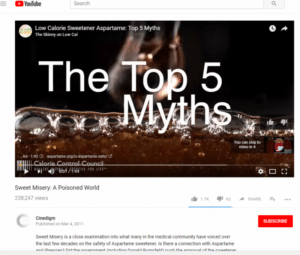
  • Aspartame: Staff promoted the “Aspartame Myths” video utilizing YouTube Instream Ads, earning more than 8,000 impressions and 2,000 views in one week. An example of an Instream Ad is below – the Aspartame Myths video plays before viewers can watch “Sweet Misery – A Poisoned World”, an anti-aspartame documentary.


Dr. Craig Johnston to Present Findings on Childhood Obesity

Posted by & filed under Children, Health Professionals, Sucralose.

ATLANTA (April 9, 2018) – Dr. Craig Johnston, an Associate Professor at the University of Houston where he actively studies the behavioral treatment of obesity, is presenting research, “Finding the Answers to Childhood Obesity,” at the Texas Academy of Nutrition and Dietetics’ Annual Conference in Houston, Texas on Friday, April 13, 2018  during the 1:45 – 2:45 PM Concurrent Session. The conference is taking place in Houston from April 12th – 14th at the Houston Marriott Westchase. The Texas Academy of Nutrition and Dietetics is a not-for-profit professional organization of over 4,000 registered dietitians, dietetic technicians, and students who provide expert food and nutrition resources for Texans.

Childhood obesity continues to be one of the most important issues to address from a public health perspective. In this research, Dr. Johnston aims to both identify causes and solutions to childhood obesity within children.  Although it appears that rates of obesity may be leveling off in some groups, the overall prevalence remains at a very high level in the United States. Additionally, there are racial and ethnic inequalities among Caucasian, African American, Latino and Asian children between the ages of 2-19 years of age. This presentation will address the problem of childhood obesity and highlight the successful behavioral programs conducted by Dr. Johnston in minority schools in Houston – Texas currently ranks sixth among states in rates of childhood obesity. Johnston notes that “by incorporating certain lifestyle management strategies into school-based programs” he was able to make greater improvements in groups more at risk for obesity. This includes certain lifestyle management programs in schools that have demonstrated improved weight outcomes in children and teens.

“The Calorie Control Council felt supporting Dr. Johnston’s work was important as strategies to promote healthy weight management must also address competing priorities amongst children, such as taste preferences, in order for behavior change to be maintained into adulthood” remarked Michelle Smolarski, Scientific and Nutrition Coordinator for the Council. Healthcare professionals may register to attend the conference at EatRightTexas.org.


The post Dr. Craig Johnston to Present Findings on Childhood Obesity appeared first on Sucralose.


Research on Splenda® sweetener shows reduction in weight and no impact on glucose

Posted by & filed under Health Professionals, Sucralose.

March 20, 2018 — A recent study “The Artificial Sweetener Splenda Promotes Gut Proteobacteria, Dysbiosis, and Myeloperoxidase Reactivity in Crohn’s Disease–Like Ileitis” was published the March 2018 issue of Inflammatory Bowel Diseases.

Splenda®, a low-calorie sweetener is a mixture of sucralose, a non-caloric sweetener, and maltodextrin, which provides texture and volume.  Sucralose has been reviewed and determined to be safe by regulatory authorities around the world, and has been approved for use in the US since 1998.  Scientific experts also support the role of sucralose in weight management.  Maltodextrin is a nutritive polysaccharide, derived from corn, and affirmed as “generally recognized as safe” (GRAS) by the US Food and Drug Administration.

This study compared how exposure to a sucralose and maltodextrin blend in mice who were prone to developing a condition resembling Crohn’s disease in humans compared to exposure in mice considered healthy.  Exposure was provided through the animals’ drinking water. Contrary to a press release by Case Western Reserve University, the study does not show that sucralose can worsen gut inflammation in mice with Crohn’s-like disease. What the study did show is an increase in proteobacteria in the stool of mice with the Crohn’s-like condition. Proteobacteria is involved in the digestion of maltodextrin, so this finding is not surprising. The clinical significance of the findings regarding exposure to either sucralose or maltodextrin based on this study is unknown for animals and humans.

Low-calorie sweeteners continue to be a safe tool in helping to reduce caloric intake and manage weight and type 2 diabetes.  This study offers support to the benefits of low-calorie sweeteners by showing a reduction in weight and no impact on glucose in the mice that consumed sucralose.

Learn more about sucralose at www.sucralose.org and about global health authorities that support the use of low-calories sweeteners here.

The post Research on Splenda® sweetener shows reduction in weight and no impact on glucose appeared first on Sucralose.


Claims of Predisposition to Diabetes and Fat Accumulation from Low Calorie Sweeteners Not Based On Physiologically Relevant Data

Posted by & filed under Health Professionals, Statements, Sucralose.

March 19, 2018 — Recent research presented at the Endocrine Society’s 2018 Annual Meeting suggest possible impacts of sucralose on fat production in normal weight and obese individuals. This research, which is very similar to that presented by the same researchers during the group’s 2017 meeting, suggests the consumption of sucralose promotes adipogenesis and inflammation, impacts sweet taste receptors and glucose transporters, and is more pronounced in those with obesity. While this “new” study involved more subjects than the previous research, the results contained the same flaws as before.

At this point, both the research from 2017 and this update are preliminary and not yet published in a peer-review journal. Peer-review allows for critical methodological and statistical evaluation, and the Calorie Control Council cautions against accepting conclusions based on unpublished data. While the researchers used a variety of doses including what they consider typical intake levels, it must be noted that plasma levels of sucralose are not similar to levels in human tissue. Therefore, the doses utilized throughout this study have no physiological relevance. In addition, while the researchers again showed small increases in adipogenic genes, it does not mean cells or tissues have been changed in a meaningful way. In the human subjects, low calorie sweeteners (LCS) intake is not quantified, making it difficult to determine the impact of consumption on the analyzed abdominal fat samples. Finally, the research continues to go against well-established conclusions that sucralose is not well absorbed, is minimally metabolized and is excreted primarily unchanged in the feces of humans. Further, regarding the claim that effects are more pronounced in obese individuals, it remains highly unlikely that habitual consumption of sucralose would result in its accumulation in the body, including in the fat tissue (1).

All LCS (including sucralose) that are present in the food supply, as well as in tabletop forms, have been extensively vetted and continuously receive approval by the leading regulatory and governmental agencies around the world, including the U.S. Food and Drug Administration (FDA) and the European Food Safety Authority (EFSA).

1. Magnuson, B.A.,Carakostas, M.C., Moore, N.H., Poulos, S.P., Renwick, A.G. (2016). Biological fate of low-calorie sweeteners. Nutrition Reviews, 74(11): 670-689.

The post Claims of Predisposition to Diabetes and Fat Accumulation from Low Calorie Sweeteners Not Based On Physiologically Relevant Data appeared first on Sucralose.


Protected: February 2018

Posted by & filed under Uncategorized.

Calorie Control Council Alerts

CCC’s Monthly Alert serves to inform its members of developments from the previous month concerning topics of interest to the Council. Below are highlights which cover past, current, and on-going regulatory updates, industry & consumer issues, and Council activities from February, 2018.
US Policy and Regulatory Updates
  • USDA Discontinues SuperTracker
  • Richmond to Revisit Beverage Tax
  • GOP Chairman Questions US Funding for IARC
  • California’s Prop 65 to Require Declaration of Specific Carcinogens & Reproductive Toxicants
  • “Diet” Soda Advertising Lawsuit Dismissed
  • House Passes Legislation to Scale-back Menu Labeling Regulations
  • Trump Budget Ensures Funding for Food Safety Programs, But Lacks Specifics for FDA
Publication Updates 
  • Canadian Press Uncovers Global Review Discouraging Soda Tax
  • Media Focus on Study Attributing Weight Loss to Diet Quality, Not Quantity
  • Better Homes and Gardens Features Alternative Sweeteners
  • Study Reveals Consumer Type Most Likely to Read Nutrition Label
Council Updates
  • CCC Submits Comments to FDA Regarding Dietary Fiber Guidance
  • CCC Staff to Optimize Research Study Summaries
  • General Program
  • Fiber Working Group
  • Aspartame Working Group
International Policy and Regulatory Updates 
  • Singapore Looks to Sugar Substitutes to Combat Diabetes
  • Nordic Countries Publish Joint Protocol for Monitoring Child Marketing Tactics
  • Chile to Implement Final Regulations on Advertising Packaged Foods and Beverages
Council Updates 
  • CCC Attends CCFA US Public Meeting
  • CCC Submits Letter to WHO on Allulose
  • CCC Submits Letter to Correct Saccharin MSDS on ScienceLab.com
Communications Updates
  • General Program
  • Working Groups
Consumer Insights 
  • Belgian Consumer Group Says “No Added Sugar” Claims are Illegally Used on Alternatively-Sweetened Products
  • Startups and Health Practitioners Provide Dietary Advice Based on Microbiome
  • Several Food Labeling Claims Currently Put Companies at Risk of Class Action Lawsuit
  • Industry Uses Science Policy to Promote Transparency
  • Washington Post Addresses Bad Nutrition Advice on Internet


US Policy and Regulatory Updates

USDA Discontinues SuperTracker
As reported by the US Department of Agriculture (USDA) on February 1, USDA’s SuperTracker will be discontinued beginning on June 30, 2018. SuperTracker was first launched in 2011 and served as one of the first free tools available to the public for diet tracking. Since that time, the private sector has launched similar tools and apps with the same purpose. As a result, USDA states that “It is time for us to discontinue SuperTracker so that we can invest in more modern and efficient ways to help Americans find a healthy eating style that is right for them.”

Richmond to Revisit Beverage Tax
On February 2, a local news source reported that the Richmond (Virginia) Progressive Alliance (RPA) plans to leverage its majority on the City Council to put a penny-per-ounce sweetened beverage tax back in front of voters on the upcoming June ballot. The city previously failed to pass two tax proposals – one in 2012 and one in 2016. Unlike the failed measures, the new tax proposal is predicted to be aimed at beverage distributors, with hopes that it will not lead to higher prices for consumers. The proposed tax will apply to soda, sports drinks, energy drinks and sweetened iced teas that contain at least 2 calories per fluid ounce. In addition to beverages, the tax would apply to stand-alone sweeteners that add calories such as sucrose, fructose, and glucose.

GOP Chairman Questions US Funding for IARC
On February 6, The Hill published an article reporting on a hearing during which the chairman of the House Science, Space and Technology Committee, Rep. Lamar Smith (R-Texas), questioned whether the United States should contribute funding to the International Agency for Research on Cancer (IARC). Smith’s question was prompted by IARC’s conclusions on the pesticide glyphosate, which the representative called “unsubstantiated” and “not backed by reliable data.” He further explained, “The selective use of data and the lack of public disclosure raise questions about why IARC should receive any government funding in the future.” While the Science Committee’s vice chairman, Rep. Frank Lucas (R-Okla.) sided with Smith, Democrats pushed back at the GOP’s description of IARC. Rep. Suzanne Bonamici (D-Oregon) stated, “It is important that we review the methods and tactics that industry has used to influence this [Trump] administration and attack independent scientific organizations like the World Health Organization’s International Agency for Research on Cancer.”

California’s Prop 65 to Require Declaration of Specific Carcinogens & Reproductive Toxicants
According to a February 26 article in Beverage Daily, recent changes to California’s Safe Drinking Water and Toxic Enforcement Act, commonly known as Proposition 65, will be effective on August 30, 2018. Enacted in 1986, Proposition 65 serves to inform consumers of products that contain potential carcinogens. This list of possible toxicants is updated once a year, and is now 800 chemicals long. In the past, products have been required to have a Prop 65 warning label, but the changes will now require beverage companies to identify specific chemical names in addition to a warning symbol.

The article notes that furfuyl alcohol, which is created naturally as a result of the process of heating sugar to create caramel color, must have a warning regardless of how much is in a product, even if trace amounts are used in caramel, coffee, soda, and maple-flavored drinks.

As Packaging Digest  further explains, the most significant change is a revision of the warning language to define “clear and reasonable” that requires the identification of at least one carcinogen and at least one reproductive toxicant and refer consumers to a Lead Agency Website for additional information. The new regulations present the possibility of manufacturers to face liability even when a warning is provided because there is, arguably, a lot of potential for error.

“Diet” Soda Advertising Lawsuit Dismissed
In an article published in Reuters, on February 26 a federal judge dismissed a lawsuit claiming that advertising the word “diet” misleads people into thinking that soft drink assists in weight loss, and that it actually causes weight gain. The plaintiff argued that non-nutritive sweeteners such as aspartame “interfere with the ability to metabolize calories, and raise the risk of cardiovascular disease and diabetes.” U.S. District Judge William Alsup wrote that the plaintiff “has overstated the actual science” and further noted that supermarkets don’t display diet soda in the health food section, and said reasonable consumers would understand that calorie savings lead to weight loss only as part of a healthy diet and exercise regimen.

House Passes Legislation to Scale-back Menu Labeling Regulations
CNN reported that on February 6, the U.S. House of Representatives passed the Common Sense Nutrition Disclosure Act (H.R. 772) aimed to allow for flexibility for businesses in providing calorie count information to consumers. The legislation is in response to the Obama-era calorie information rule under the Affordable Care Act, which food establishments that have 20 or more locations must comply with by May 7, 2018. However, there are certain food products sold from glass-front vending machines that may not have calorie labeling until July 26, 2018.

The new legislation would allow businesses to provide just the calories per serving, without disclosing total calories for share-able menu items containing multiple servings. It would also allow certain businesses, such as carry-out restaurants, to post calorie information solely on the internet instead of in-person. Further, a 90 day grace period would be allowed for food businesses to correct any violations. Thus, the strong bipartisan House vote of 266-157 in favor of the bill represents a successful step in the current Administration’s de-regulatory political pathway. The bill now rests on the Senate.

Trump Budget Ensures Funding for Food Safety Programs, But Lacks Specifics for FDA
Although the fiscal year (FY) 2019 budget sets out to cut domestic programs by almost $700 billion over 10 years, federal food safety has escaped cuts and will even see small gains. According to a February 14 Food Safety News article, $9.4 billion will go to the Department of Health and Human Services, $1.4 billion of which will go to food safety efforts at the US Food and Drug Administration (FDA). While the budget does take $3.5 billion away from the U.S. Department of Agriculture, the cuts will not impact food safety. The budget document says FDA’s food safety portfolio will include implementing mandatory standards for imported foods, rapidly detecting and responding to foodborne illness outbreaks, and helping consumers make healthy choices with the most up-to-date science. The document states, “Having issued all seven foundational rules to establish a risk-based food safety system, FDA’s implementation of the Food Safety Modernization Act continues by ensuring stakeholders across the public, and private sectors are positioned to comply with these rules” and notes that in 2019 FDA will “build on these regulations and guide the modernization of our food safety system.”

However, as reported in a February 16 Food Chemical News article (subscription required), the FY 2019 budget does not include FDA’s additional budget justification document. Historically, the Administration has provided this detailed document to FDA, which allows the Agency to more precisely explain where new funds would go and how much funding each Center would receive. The article notes that it is unclear when the document will be released.

Publication Updates

Canadian Press Uncovers Global Review Discouraging Soda Tax
A February 12 article in Canada’s The Globe and Mail notes that although rising obesity rates and the idea of a new source of government revenue are logical reasons why Canada needs a soda tax, international data stands to argue this logic. The article highlights a review commissioned by New Zealand’s Ministry of Health to examine the global effectiveness of taxing food and drink to improve public health. The review conducted by the New Zealand Institute of Economic Research (NZIER), which can be viewed here, evaluated nearly 50 academic studies published over the past five years. However, as the article notes, the review was “promptly buried” after its completion in 2017 and was released only recently by the government recently after a local think tank made an official Information Act request.

The report states claims from tax advocates that soda taxes will inevitably lead to substantial reductions in demand are based on “flawed” estimates of price elasticity. In other words, tax proponents have been making unrealistic assumptions about the impact such taxes can have on human decision-making and dietary habits. NZIER summarizes “We have yet to see any clear evidence that imposing a sugar tax would meet a comprehensive cost-benefit test” and that they do not serve they’re intended purpose of improving public health.

Media Focus on Study Attributing Weight Loss to Diet Quality, Not Quantity
On February 20, The New York Times reported on a study published that day in the Journal of the American Medical Association that found that people who reduced intake of added sugar, refined grains and highly processed foods, without worrying about counting calories or limiting portion sizes, lost significant amounts of weight over the course of a year. The researchers of the study wanted to not only compare how overweight and obese people would fare on low-carbohydrate and low-fat diets, but also wanted to test whether some people are predisposed for one diet over the other depending on their genetics. As noted in a consumer insight update below, a growing number of companies have capitalized on this idea and are offering personalized nutrition advice based on their ability to metabolize carbohydrates.

The researchers found that after one year of focusing on food quality, not number of calories, both groups of participants (one low-carb group and one low-fat group) lost 11-13 pounds. After DNA samples were analyzed for a group of genetic variants that influence fat and carbohydrate metabolism, the subjects’ genotypes did not appear to influence their responses to the diets. The lead researcher, Dr. Christopher Gardner, explained his results stating “it is not that calories don’t matter. After all, both groups ultimately ended up consuming fewer calories on average by the end of the study, even though they were not conscious of it. The point is that they did this by focusing on nutritious whole foods that satisfied their hunger.”

Although this study does not specifically address sweeteners, its focus on diet quality is still relevant to the role that LCS can play in reducing total caloric and carbohydrate intake without sacrificing the enjoyment consumers look for. As Dr. Gardner states, “I think one place we go wrong is telling people to figure out how many calories they eat and then telling them to cut back on 500 calories, which makes them miserable.”

Better Homes and Gardens Features Alternative Sweeteners
A special issue of Better Homes and Gardens is on stands until May entitled “Cut the Sugar”. The issue includes a guide to sugar substitutes in an effort to answer the question, “Are sugar substitutes OK?” Low-calorie sweeteners are featured and include descriptions for sugar alcohols and what the magazine calls “noncaloric sweeteners” and “artificial noncaloric sweeteners.”

  • The article notes that sugar alcohols, including sorbitol and malitol, are found in fruits and vegetables and deliver a smaller spike in blood sugar, but warn that too much can cause bloating. It is suggested that many sugar alcohols can be substituted cup for cup in recipes. Regulatory approvals are not noted.
  • Under the section titled natural noncaloric sweeteners, stevia is listed as a plant-derived extract approved by the FDA. Monk fruit extract is also noted to be grown and produced in China but gaining popularity in the US. This category gets the most positive review.
  • The section titled artificial noncaloric sweeteners lists saccharin, aspartame, acesulfame potassium, sucralose, neotame, and advantame. It is noted that although they are all approved in the US, studies suggest these sweeteners may contribute to metabolic dysfunction and more research is needed.

While side-effects of some sweeteners are questioned, the article doesn’t make any recommendations for consumers to avoid any sweeteners or include false information. In addition, popularity and regulatory approvals of sweeteners are also referenced. As this coverage is fairly neutral and in some cases positive, CCC staff is reviewing potential opportunities to leverage the coverage in CCC content if appropriate. In addition, staff will continue to monitor for additional media pickup and consumer response to the issue.

Study Reveals Consumer Type Most Likely to Read Nutrition Label
Given the recent regulations and guidance documents accompanying the rollout of nutrition facts label (NFL) reform, it’s also important to revisit how and what type of consumer considers such labels. A new study released in the February Journal of the Academy of Nutrition and Dietetics (PDF attached) surveyed 2,000 young adults aged 25-36 primarily in the Minneapolis-St. Paul metropolitan area and found that only about one-third of young adults report frequent use of NFLs. Of these young adults, women and people with high education and income were more likely to read NFLs as well as people who regularly prepare food, who are physically active or are classified as overweight. Of those who read labels, the top nutrients of concern were found to be sugars, calories and serving size.

The study does not address what the remaining two thirds of young adults who don’t read nutrition facts labels are concerned about, or if they are concerned about nutrition information at all. Further, an article published on February 27 questions why consumers who do read NFLs often base decisions on a single attribute, and suggests this may be due to a combination of mistrust of the labels themselves as well as consumer confusion. According to a 2017 report by USDA’s Economic Research Service (ERS), much of the problem can be attributed to the lack of consistency caused by symbols for which there is not a national standard and information that consumers find confusing or too complex. For example, the NFL is governed by USDA, whereas others such as the industry-funded Facts Up Front initiative are not. FDA is attempting to address this issue, and, as reported by Politico on February 5, is allocating $3 million to be used for a public health campaign to help consumers understand the new Nutrition Facts labels.

Today’s widespread accessibility of nutrition information on packages and online provide ample opportunities for manufacturers to provide transparency about their products and for consumers to evaluate foods. However, consumers making diet choices often lack of a comprehensive food science and nutrition education. CCC staff will continue to pursue opportunities to impart not only transparency, but also enhance consumer understanding.

International Policy and Regulatory Updates

Singapore Looks to Sugar Substitutes to Combat Diabetes
As reported by a Singapore news source, Singaporeans consume an average of 12 teaspoons of sugar a day. According to a 2015 report by the International Diabetes Federation, Singapore has the second-highest proportion of diabetics among developing nations. Given this issue, the country’s Health Promotion Board (HPB) is hoping alternative sweeteners can help curb sugar intake by 25% by 2020. Specifically, they are encouraging manufacturers to partially replace the cane sugar in foods with other natural alternatives allulose and isomaltulose, because they are “less sweet and have a lower glycemic index (GI)…preventing blood sugar spikes.” the article touts. Other sugar substitutes are promoted as well, including sucralose, stevia, aspartame, and sorbitol.

However, the article notes that in addition to overcoming barriers such as after-taste and textural differences associated with alternative sweeteners, affordability is a major factor. Stewart Tan, who works at the Nanyang Polytechnic’s School of Chemical and Life Sciences, notes that per kg, allulose costs between $6 and 9$, and isomaltulose cost up to $28, while the same 1 kg amount of sugar costs about $1. Thus, further investments must be made to make these ingredients commercially available for consumers.

Of interest to the Council, Singapore can be requested as a potential location for a future USDA Emerging Markets Program (EMP) symposium, which occurs during summer/fall each year with the objective of helping U.S. organizations promote industry exports in countries that have potential to be viable commercial markets. If you have any feedback or comments surrounding this opportunity, please notify staff by Friday, March 23.

Nordic Countries Publish Joint Protocol for Monitoring Child Marketing Tactics
As reported in a February 23 article published on Food Navigator, representatives and experts from Iceland, Finland, Sweden, Denmark and Norway, in addition to participants from the World Health Organization, have released a joint protocol for marketing of foods and beverages high in fat, salt and sugar (HFSS) towards children and young people. Page 19 of the protocol further defines HFSS noting that, “In the WHOEuropean nutrient profile model, HFSS foods and beverages are categorized according to the content of total fat, total sugars, added sugar, non-sugarsweeteners, energy, saturated fat, industrially produced trans-fatty acids and salt.”

The protocol stresses the need to continuously review and adjust the protocol as necessary given that marketing methods are continually evolving, particularly with the increasing importance of social media and online platforms. Though it does not make any legally-binding recommendations, the WHO has praised it as a tool that will “help advocate policies and close loopholes.”

As a reminder, CCC submitted comments in 2017 on Canada’s public consultations on the issue of restricting marketing of unhealthy foods and beverages to children. Staff will continue to monitor the Nordic countries’ actions on this issue, and provide updates and any opportunities to comment.

Chile to Implement Final Regulations on Advertising Packaged Foods and Beverages
A February 14 World Trade Organization notification announced that as of June 11, 2018, all media advertising including television, radio, print press, and internet must bear the text “Prefer foods with fewer stop signs” followed by the phrase “Ministry of Health, Governance of Chile” in addition to one or more black octagonal stop sign labels if foods or beverages exceed content limits for energy, sodium, total sugars, or saturated fats. The content limits can be found in the WTO notification, or Decree Nº 13 of 2015. The complete specifications of the logo and message can be found here.

As this is a final regulation, there is no comment opportunity. However, it is reported that the Association of Food and Beverages of Chile (AB Chile) has expressed reservations regarding technical and nutritional aspects of the regulation, noting that “The exceptions considered in the regulation, the limits established for the critical nutrients (salt, sugar, saturated fat and energy), the measurement criterion by 100 grams or 100 milliliters (ml) and the fact that only processed and packaged foods use the black stop signs, makes it impossible to rely exclusively on the “stop signs” to choose the most suitable product.”

CCC staff will continue to monitor developments in Chile and other countries in Latin America of interest to members.

Council Updates

CCC Attends CCFA US Public Meeting 

CCC staff attended the February 13 US Public Meeting to prepare for the upcoming 50th Session of the Codex Committee on Food Additives (CCFA50), which takes place March 26-30 in Xiamen, China (more information here). The purpose of the meeting was to review the provisional CCFA50 agenda  and corresponding draft US positions on CCFA agenda items, take public questions, and offer comments.

As advised, CCC staff and members will attend CCFA50. Draft US and CCC positions have been circulated to members and staff is requesting active engagement by members in providing feedback.

CCC Submits Letter to WHO on Allulose
On February 27, CCC submitted a letter to the World Health Organization (WHO) on behalf of the Council’s Allulose Working Group. The purpose of the letter was to communicate the differences between allulose and other monosaccharides and encourage the WHO to recognize these differences in relevant WHO recommendations and guidance documents. If you would like to receive a copy of this letter please contact a CCC Staff member.

CCC Submits Letter to Correct Saccharin MSDS on ScienceLab.com
On February 27, CCC submitted a letter to ScienceLab.com on behalf of the Council’s Saccharin Working Group. The letter served to notify ScienceLab.com of inaccuracies included in the Material Safety Data Sheet (MSDS) posted under the name “Sodium saccharin dehydrate” on its website. The letter requested that the inaccurate MSDS be replaced with an updated MSDS from a member company.

Communications Program

General Program

  • Staff refreshed web content regarding the safety of low and no calorie sweeteners, including authoritative statements from regulatory bodies.
  • Dr. Keri Peterson reviewed the recent editorial published in JAMA on weight management, “Counting Calories as an Approach to Achieve Weight Control.”

Working Groups 

  • Saccharin: A new recipe section is being added to Saccharin.org.
  • Sucralose: Staff has begun to promote Dr. Craig Johnston’s presentation “Finding the Answers to Childhood Obesity” at the Texas Academy of Nutrition and Dietetics Annual Conference (Houston, Texas) on Friday, April 13, 2018. The Sucralose Working Group is sponsoring the presentation.
  • Aspartame: 
    • A new blog post, “Novice to Superstar: how athletes excel’ was published to Aspartame.org. The post offers advice on ways to stay hydrated without adding additional calories through the use of low-calorie sweetened beverages.
    • Staff created a new video, “Aspartame Myths” debunking the top five myths on aspartame. The video will be promoted on digital platforms.

Consumer Insights

Belgian Consumer Group Says “No Added Sugar” Claims are Illegally Used on Alternatively-Sweetened Products
Test Achats, a Belgian consumer group, carried out a survey on food products in Belgian supermarkets and found that many products carrying the claim “no added sugar” such as spread, chocolate bars, and cookies, contain alternative sweeteners. According to the February 6 article published by Food Navigator, Test Achats noted this is “pure and simply illegal” according to European law, which mandates that “a claim stating that sugars have not been added to a food, and any claim likely to have the same meaning for the consumer, may only be made where the product does not contain any added mono- or disaccharides or any other food used for its sweetening properties.”

Test Achats sent an official letter in December to five manufacturers whose products used sugar-free claims despite containing sweeteners. Dukan, Damhert Nutrition and Boerinneke use malitol to replace sugar, while Sweet-Switch uses stevia. Canderel blends aspartame and acesulfame-k. The three companies sourcing malitol immediately responded saying that their products’ packaging will be corrected, and Canderel eventually replied that it was “considering how [it] can adjust [its] labels”. However, Sweet-Switch contested Test Achats’ rebuke, prompting the consumer group to file an official complaint to the Belgian Federal Public Service for Health, Food Safety and the Environment.

Startups and Health Practitioners Provide Dietary Advice Based on Microbiome
On February 25, the Wall Street Journal published an article reporting that some startups are claiming to be able to help people diet by using the same technology used by researchers to sequence human gut bacteria. The article addresses the glucose response as the primary problem with a “one size fits all” approach to diet recommendations. Advances in genetic sequencing have led researchers to believe that bacteria in the microbiome affect the body’s postprandial glucose response (PPGR).

The article features DayTwo Inc.and Viome Inc., two startups who have capitalized on this trend by offering to help customers normalize their blood sugar by analyzing their glucose response after sequencing their microbiome based on a stool sample. Viome analyzes not only bacteria but also viruses and fungi in the gut. Both companies then send back individually tailored diets via an app. It is noted that Viome’s dietary advice is not based on peer-reviewed research, but the company is conducting a microbiome study on 2,000 people that should be completed later this year. Other companies, including uBiome Inc., the American Gut project and Biohm also offer sequencing of the microbiome, but they do not provide advice on which foods elevate peoples’ blood glucose.

In addition to startups, the medical and health community is becoming more believing of this trend. Whereas before many doctors were hesitant to base nutritional advice on the microbiome, many believe it’s possible to give some dietary advice based on microbiome analysis. Jack Gilbert of the University of Chicago’s Microbiome Center is quoted, “This is less about trying to identify the particular mechanisms of the microbes and more about identifying the potential correlated association between the microbial communities and how they positively associate with blood-glucose levels and response to different types of food.” The article also notes that the American Academy of Nutrition and Dietetics, which only last year expressed reservations about microbiome-based diets, is beginning to evolve its position if advice is paired with input from a dietitian.

Several Food Labeling Claims Currently Put Companies at Risk of Class Action Lawsuit
According to an article published by Food Navigator on February 1, plaintiff’s attorneys closely monitor FDA warning letters, opinions from scientific bodies, organizations such as the World Health Organization, and consumer advocacy groups for litigation opportunities. Given the current landscape, manufacturers should be particularly careful when making the following claims:

  • “Added sugar”: Although FDA’s ‘healthy’ nutrient content claim criteria does not include sugar, plaintiff’s attorneys claim that advertising products high in added sugar as healthy is misleading to consumers. In this case, attorneys are citing WHO recommendations that we reduce added sugar intake to 10% of energy (50 g) and ideally less than 5% (25 g) for adults.
  • “No added sugar”: While this claim might be factually accurate, companies are not allowed to make this claim if consumers don’t expect comparable products to contain added sugar.
  • Omission of additives: Companies should be cautious when marketing the ingredient make-up of products. The article provides the case example of Miller v Yucatan Foods in which a guacamole product was labeled ‘95% avocado, 5% spices’ when it also contained other ingredients such as xanthan gum and sugar.
  • “Natural” claims: Attorneys are now focusing on natural claims on products in which genetic engineering is featured anywhere in the production process, products containing even trace levels of pesticide residue, and “anything seen as heavily processed, even if from natural source.” Without formal FDA regulations, and given that ‘natural’ is not included in the Agency’s 2018 strategic policy roadmap, these cases are expected to flourish. A New York Times article reports that the new focus in natural litigation away from the ingredients in the food to the actual food chain (i.e. how the crop was grown or what the animals were fed) may undermine the original goal of the lawsuits to address nutrition concerns.
  • Value added ingredients used in insignificant amounts: Numerous lawsuits have been pursued against manufacturers who overstate the importance of an ingredient used in an insignificant amount.
  • Wholegrain claims: FDA’s draft guidance on this is not written into law and does not cover all angles. Companies are advised to avoid claims such as ‘made with whole grain flour’ unless the predominant ingredient is whole grain flour.
  • Fruits and vegetables in processed foods: To prevent lawsuits alleging misleading of consumers, companies are advised not to “overstate a product’s health benefits or imply eating processed foods is equivalent to eating fresh fruits and vegetables.”

Although it is noted that most cases that proceed through the courts hardly ever go to trial, companies must be prepared to incur more than $100,000 in legal fees and multi-million dollar settlements by the end of the case. It is suggested that companies periodically review longstanding claims to ensure they remain well-positioned to face contemporary standards being established by class action settlements.

Industry Uses Science Policy to Promote Transparency
A February 5 article in Reuters reported on Mars Inc.’s publication of its own Company policies on conducting and funding scientific studies. Entitled, “Mars, Incorporated Policy on Scientific Research and Engagement” (view here), the policy covers all types of scientific research activities, ranging from internal and external research, partnerships with academia, government, and non-governmental organizations, foundations and other businesses. Mars pledges it will not tie research funding to specific outcomes, among its commitments, and that it will disclose sponsorship and support studies that can be freely published regardless of results.

The article notes the strategic timing of Mars’ policy, as consumer distrust in large food corporations, criticism of bias in scientific research, and calls for complete transparency continue to mount. Peter Lurie, head of the Center for Science in the Public Interest and former FDA official, notes “Guidelines for publishing complete data and disclosing conflicts of interest are fairly standard practices for pharmaceutical research but less widespread for food.”

Washington Post Addresses Bad Nutrition Advice on Internet
In an article published February 6, The Washington Post discusses the use of science to combat the current swirl of bad nutrition advice being circulated throughout the internet. The article praises the efforts of the following “myth-busters” for creating a movement that reminds people not to believe everything they read:

  • David Gorski, managing editor of Science-Based Medicine, and Yvette d’Entremont, an analytical chemist and forensic scientist writing under the pen name of SciBabe have both debunked Vani Har (Food Babe).
  • James Fell, a blogger at Body for Wife and fitness columnist, called out harmful diet practices on “The Biggest Loser” TV show.
  • Timothy Caulfield, professor and research director at Health Law Institute of the University of Alberta, often debunks Gwyneth Paltrow’s lifestyle brand Goop.

The article highlights several warning signs for readers that indicate junk science, including:

  • A list of many misleading items to leave their opponent flustered by heaps of pseudoscience. This makes it look like the speaker wins the debate because the scientist can’t possibly reply to it all.
  • Science is alluded to, but no references to reputable studies are cited.
  • One treatment protocol is said to heal a long list of conditions.
  • Information is based on testimonials and anecdotes, not on research.
  • The words “magic” or “miracle” are used.

CCC staff is monitoring for opportunities to encourage decisions and opinions based on sound-science. Content is currently being developed to educate consumers on different types of studies, and how to critique headline-breaking studies that are often mistaken as causation, or contain unreliable findings.


Novice to Super Star: How athletes excel

Posted by & filed under Aspartame, Featured.

Oftentimes when watching great athletic achievements or difficult sporting events, we are inspired to become more physically active. While most will not become elite athletes, understanding how these athletes became proficient in their sport can help us succeed in leading a healthier lifestyle.
Big Goals Aren’t Achieved In One Day, But Each Day Counts

When it comes to sporting events, think of the final as the tip of the iceberg. The audience gets to watch one moment that is the culmination of years of hard work, built on many smaller achievements that lead to this one event. Setting short-term goals is an important part in achieving your ultimate goal. This includes making and sustaining long-term lifestyle changes. Experts at Health Link British Columbia have a short article to specifically address settings fitness goals, available here.

Establish a Solid Foundation

A realistic lifestyle goal should take into consideration your lifestyle and support system. Check with your doctor as your current health may influence the type, intensity and amount of activity you should engage in or what types of diet changes you should make. Your healthcare provider may also suggest following up with them or suggest other healthcare professionals that you may need to consult. For example, a physical therapist may help manage existing injuries and reduce the risk of injury, while an exercise physiologist can assess your physical fitness level and help you develop a fitness plan. Dietitians can help assess your current eating habits and help you appropriately provide fuel, energy and fluids to achieve your goals.

Your support system may also include family and friends that can keep you motivated and provide insights into your health goals. Individuals that stick to plans when others are involved could identify a group or partner to be accountable to or find challenges to motivate themselves.

Off Days Don’t Mean You Should Give Up

Everyone has ‘off days’ and experiences challenges when trying to achieve their goals. In fact, well-trained athletes have to balance training, competition, scheduling recovery and staying fit in the ‘off season.’ In depth stories about athletes often highlight struggles that are not limited to training. It is not uncommon to occasionally feel you’ve lost time, focus or motivation and realize you didn’t accomplish your plan for the day. An occasional ‘off day’ is no reason to derail yourself from your goal. The American College of Sports Medicine offers tips for Finding Your Motivation For Exercise.

Fuel Your Goals

A common challenge and risk for losing motivation is balancing nutrition and energy for physical activity. Regardless of whether someone is an elite athlete or wanting to lose weight and be more physically active, appropriate nutrition and hydration is critical. Balancing energy and fluid needs requires considering activity amount and intensity, environmental considerations (including temperature and humidity), medications and recovery time. Ensuring adequate intake of all key nutrients will help an individual perform at their best.

It is also critical to consider fluid intake before, during and after physical activity since dehydration and hypohydration can reduce performance. This can also increase the perception of the intensity level of physical activity. Consuming the right types and amounts of nutrients and fluids for each activity is important. It may be helpful to read the tips provided by the American College of Sports Medicine on “Selecting and Effectively Using Hydration For Fitness.” As the handout notes, flavor, salt content and beverage temperature can help improve palatability and make it more likely that you consume enough fluids. For example, leisurely activities such a long walk or exercise lasting less than 90 minutes may require more fluid intake than calories. Consuming enough low-calorie sweetened beverages to avoid dehydration reduces the risk of consuming more calories than you used during exercise. For activities that are low intensity or less than 90 minutes, consider bringing your favorite low calorie beverage, packets of low-calorie beverage powder or flavor drops that you can add to your water along the way. Just make sure that water will be available and that you bring a bottle with you.

On the other hand, prolonged activities will likely require both sufficient fluid and calories. Some athletes find it challenging to eat foods during prolonged activities and consume sports beverages and gels instead, while others prefer consuming both foods and beverages to meet their needs. This preference extends beyond the activity when you have to consider ideal nutrition for recovery. It may be helpful to work with a dietitian that can help develop a personalized nutrition and hydration plan for you. The plan may include low calorie sweeteners and foods as well as high calorie foods to ensure the timing of your nutrient intake is ideal for your goals.

While tuning into your favorite sporting event might inspire you to lace up, it’s best to be prepared before you start any new workout regimen. Set small goals, consult your physician and remember that nutrition is the fuel that keeps you going.

The post Novice to Super Star: How athletes excel appeared first on Aspartame.


faq2Do you have questions about low-calorie sweeteners? Want to learn more about maintaining a healthy lifestyle? You asked and we listened. Our resident Registered Dietitians answered the most popular questions about low-calorie sweeteners.

Media Contacts

For media inquiries please reach out to any of the below contacts: