Cold and Creamy Fruit Cups

Posted by & filed under Aspartame, Desserts, Recipes.

Makes 12 Servings

Ingredients

1 package (8 ounces) reduced-fat cream cheese, softened
1 cup reduced fat sour cream
1/3 cup Equal Spoonful
2 teaspoons lemon juice
1 cup coarsely chopped fresh OR canned drained peaches
1 cup fresh OR frozen unsweetened blueberries
1 cup fresh OR frozen unsweetened raspberries OR halved OR quartered strawberries
1 cup cubed fresh OR canned drained pineapple
1 can (11 ounces) Mandarin orange segments, drained
12 pecan halves, optional

Directions

Beat cream cheese, sour cream, aspartame and lemon juice in mixing bowl on medium speed of mixer until smooth and well combined.
Fold in all of the fruit using a spoon.
Spoon the mixture into 12 paper-lined muffin cups.
Garnish each with a pecan halves
Freeze 6 to 8 hours or until firm
Let stand 10 to 15 minutes or until slightly softened before serving.

Nutritional Information

Calories: 119
Protein: 4 g
Carbohydrates: 15 g
Fat: 6 g
Cholesterol: 16 mg
Sodium: 105 mg


Recipe courtesy of Equal.com.

The post Cold and Creamy Fruit Cups appeared first on Aspartame.


Apple Raisin Oatmeal Cookies

Posted by & filed under Aspartame, Desserts, Recipes.

Makes 4 Dozen

Ingredients

Cooking spray
1-1/4 cups Equal Spoonful1 cup unsweetened applesauce
1/2 cup firmly packed brown sugar
6 tablespoons butter, softened
1 egg
1/3 cup 2% milk
2 teaspoons vanilla extract
2 cups all-purpose flour
1 teaspoon baking soda
1 teaspoon ground cinnamon
1/4 teaspoon ground nutmeg
1/4 teaspoon salt
1-1/2 cups quick OR old-fashioned oats, uncooked
1 cup raisins

Directions

Preheat oven to 350°F. Spray baking sheets with cooking spray; set aside.

Mix Equal, applesauce, brown sugar, butter, egg, milk and vanilla in a large bowl using an electric mixer until well blended. Stir in combined flour, baking soda, cinnamon, nutmeg and salt. Gradually mix in oats and raisins until well combined. Drop by tablespoonfuls onto prepared baking sheets.

Bake 10 to 12 minutes or until light golden in color. Remove from baking sheet and cool completely on wire rack.

Nutritional Information

Calories: 67
Protein: 1 g
Carbohydrates: 12 g
Fat: 6 g
Cholesterol: 8 mg
Sodium: 42 mg


Recipe courtesy of Equal.com.

The post Apple Raisin Oatmeal Cookies appeared first on Aspartame.


Nonalcoholic fatty liver disease is associated with excessive calorie intake rather than a distinctive dietary pattern

Posted by & filed under Fructose, Health Professionals, Research Summaries.

A study published in Medicine sought to characterize the dietary patterns of patients with nonalcoholic fatty liver disease (NAFLD) and to assess the efficacy of dietary interventions on NAFLD related outcomes.

Researchers collected a total of 55 NAFLD patients and 88 controls to complete the study in northern Germany. All participants were subjected to a physical examination including blood analysis to measure blood glucose, total cholesterol, high-density lipoprotein (HDL), low-density lipoprotein (LDL), triglycerides, alanine aminotransferase (ALT), aspartate transaminase (AST), and gamma-glutamyl transpeptidase (γGT). The extent of liver fibrosis was also determined. All participants were required to complete a food frequency questionnaire (FFQ), and describe their lifestyle as sedentary, low-active, or active. Nutritional data was analyzed and normalized to 1000 kcal caloric intake and analyzed again.

Researchers found that the mean body weight, body mass index (BMI), waist circumference, fat mass, ALT, AST, γGT, triglycerides, and blood glucose were all significantly higher in the NAFLD group compared to the control. HDL was significantly lower in the NAFLD group compared to the control. Of the NAFLD patients, 13 reported a sedentary lifestyle, 22 reported a low-active lifestyle, and 20 reported an active lifestyle.

The NAFLD patients consumed significantly more calories per day. The NAFLD group consumed a median daily energy intake of 2739 kcals (range: 1009-5941kcals) whereas the control consumed a median of 2173kcals (range: 1199-4320kcals). Overall, the NAFLD patients consumed more fat, carbohydrates, and protein than the control but fiber intake was comparable between both groups. When researchers normalized the nutritional data per 1000 kcals they found that the NAFLD patients had significantly lower fiber and mineral intake and significantly more protein and glucose intake per 1000 kcals compared to the controls. The fructose, carbohydrate, and fat intake per 1000 kcals in the NAFLD group was not significantly different than the controls.

A total of 24 NAFLD patients participated in a 6 month follow up study in which patients received up to 5 sessions of dietary counselling every 4 to 6 weeks. At the 6 month follow up a second FFQ was administered and patients were underwent reevaluation. The mean weight loss was 3.4%. Patients consumed fewer calories daily compared to baseline diet. Carbohydrate, protein, glucose, and fructose intake per 1000kcals did not change significantly from baseline. Conversely, patients consumed more fiber and more fat per 1000kcals at the follow up than at baseline. The ATL levels for all participants at follow up were significantly lower than at baseline; however researchers note “due to the small number of patients who were available for follow-up, we found no association between weight loss or reduction of specific nutrition components and ALT improvement.”

Researchers conclude “We found an energy-dense diet with relatively high amounts of protein and glucose, but poor in fiber and minerals to be associated with NAFLD…there was no significant difference in fructose ingestion normalized to the daily caloric intake. However, this does not exclude a dose-dependent hepatotoxic effect of fructose.”

The post Nonalcoholic fatty liver disease is associated with excessive calorie intake rather than a distinctive dietary pattern appeared first on FructoseFacts.


Postexercise Repletion of Muscle Energy Stores with Fructose or Glucose in Mixed Meals

Posted by & filed under Fructose, Health Professionals, Research Summaries.

A recent study published in the American Journal of Clinical Nutrition asserts that consumption of fructose “lowers whole-body glycogen synthesis and impairs subsequent exercise performance, presumably because of lower hepatic glycogen stores.” The study sought to compare “isocaloric mixed meals containing fat and protein with either pure fructose or pure glucose” on intramyocellular lipids (IMCL), muscle glycogen, and whole-body metabolism.

A total of eight, trained male cyclists completed the study. The participants [age 29 ± 2 y; weight 71.2 ± 1.9kg; BMI 22.6 ± 0.4] were recruited from triathalon and cycling clubs in Lausanne, Switzerland and were nonsmokers, took no medications, and had no family history of diabetes.

The double-blind, crossover-controlled, randomized study included a preliminary visit to measure peak oxygen consumption and then two treatments with a 2-4 week washout period between the two conditions.  Each experiment began with a 2.5 day controlled diet (day 1 until 1130 on day 3) which provided 1.5 times their calculated basal energy expenditure and was comprised of 55% carbohydrate, 30% fat, and 15% protein. On day 1, participants competed 1 hour of endurance exercise. On day 2, participants were asked to be sedentary. On day 3, the subjects participated in a prolonged exercise session (1230-1500). Following the prolonged exercise session, IMCL and muscle glycogen stores were measured. Participants were then provided with experimental isocaloric mixed diets which contained either pure fructose (FRU) or pure glucose (GLU) in 8 liquid meals ingested at 1800, 2000, 2200 on day 3 and at 0800, 1000, 1200, 1400, and 1600 on day 4. The beverages contained the same total energy and macronutrient distribution. On day 4, before the 0800 liquid meal serving, plasma metabolic markers and energy metabolism were measured. These were monitored over a 6 hour period (0800-1400). At 1700 on day 4, IMCL and muscle glycogen were measured. After this collection, participants were provided with sandwiches and asked to fast for the remainder of the day. On day 5, participants returned to the testing facility in a fasted state and had their metabolism measured during a 3 hour standardized exercise program.

Researchers noted the following results:

  • IMCL and muscle glycogen repletion were comparable between glucose and fructose.
  • On day 4 fasting glucose, fructose, insulin, glucagon, lactate, and triglyceride concentrations were not different between fructose and glucose groups. After liquids consumption (0800-1400) postprandial glucose and insulin responses were lower in the fructose group compared to the glucose group. After liquids consumption (0800-1400), analogous postprandial blood glucagon, lactate, and triglyceride were higher in the fructose group compared to the glucose group.
  • On day 4, fasting free fatty acid concentrations were lower in the fructose group compared to the glucose group (P=0.01). After liquids consumption (0800-1400) free fatty acid concentrations were suppressed under both fructose and glucose conditions.
  • On day 4, fasting metabolic rate, respiratory exchange ratio, and substrate oxidation were similar in the fructose and glucose groups. After liquids consumption (0800-1400) postprandial energy expenditure was higher in the fructose group compared to the glucose group, corresponding with a higher respiratory exchange ratio and an increased net carbohydrate oxidation. Lipid oxidation was lower in the fructose versus glucose group. Protein balance was similar between both groups.
  • 4 of the 8 subjects were unable to maintain the target power output after the FRU diet suggesting impaired endurance exercise capacity.
  • Compared with glucose, fructose consumption increased postprandial energy expenditure and net carbohydrate oxidation. Whole-body carbohydrate storage was 18g less in FRU compared to GLU.

Researchers concluded “this study indicates that pure fructose or glucose ingested together with Fat and protein in the 24 h period after a strenuous exercise session leads to similar energy storage in IMCLs and muscle glycogen. Muscle glycogen synthesis was likely fueled in FRU by glucose and lactate derived from fructose and released into the blood by splanchnic organs. Net whole-body glycogen storage was lower, and performance during subsequent exercise was decreased in FRU.”

The post Postexercise Repletion of Muscle Energy Stores with Fructose or Glucose in Mixed Meals appeared first on FructoseFacts.


Recommended Daily Intake

Posted by & filed under Fiber, Health Professionals.

“Of the under-consumed nutrients, calcium, potassium, dietary fiber, and vitamin D are considered nutrients of public health concern because low intakes are associated with health concerns.”Dietary Guidelines for American 2015-2020 (8th edition).

In the United States, the recommended dietary fiber intake is 14g/1,000kcal. For an average adult, this means a daily intake of 25g (female) or 38g (male). Most Americans only consume about half of the recommended intake (13.5 and 18g, respectively). This shortage in our diet is called the fiber gap.

Given Americans’ current eating habits, closing the fiber gap without consuming fiber-enriched foods would also mean significantly increasing calorie intake.  To reach the recommended fiber intake without fiber-enriched foods, most Americans would need to increase their calorie intake by more than 500 calories per day. But meeting fiber requirements doesn’t have to mean adding calories if fiber enriched foods are consumed. Studies have shown, for example, that enriching grain foods with fiber (2.5g–5g) resulted in a fiber intake of 24.7g–39.1g/day with no caloric increase. (Nicklas et al, 2011; Jones, 2014)

Fiber-enriched foods help bridge the fiber gap while delivering excellent taste and additional metabolic benefits. The overall diet should have a mix of various fiber types.

Consuming a Variety of Fibers

Although most fibers will have more than one health-related effect, no one fiber can produce every potential health benefit. Some effects are well recognized for a large number of different fiber types, while others can be very fiber specific.  To maximize the health benefits of fiber, it is important to consume a variety of fibers.

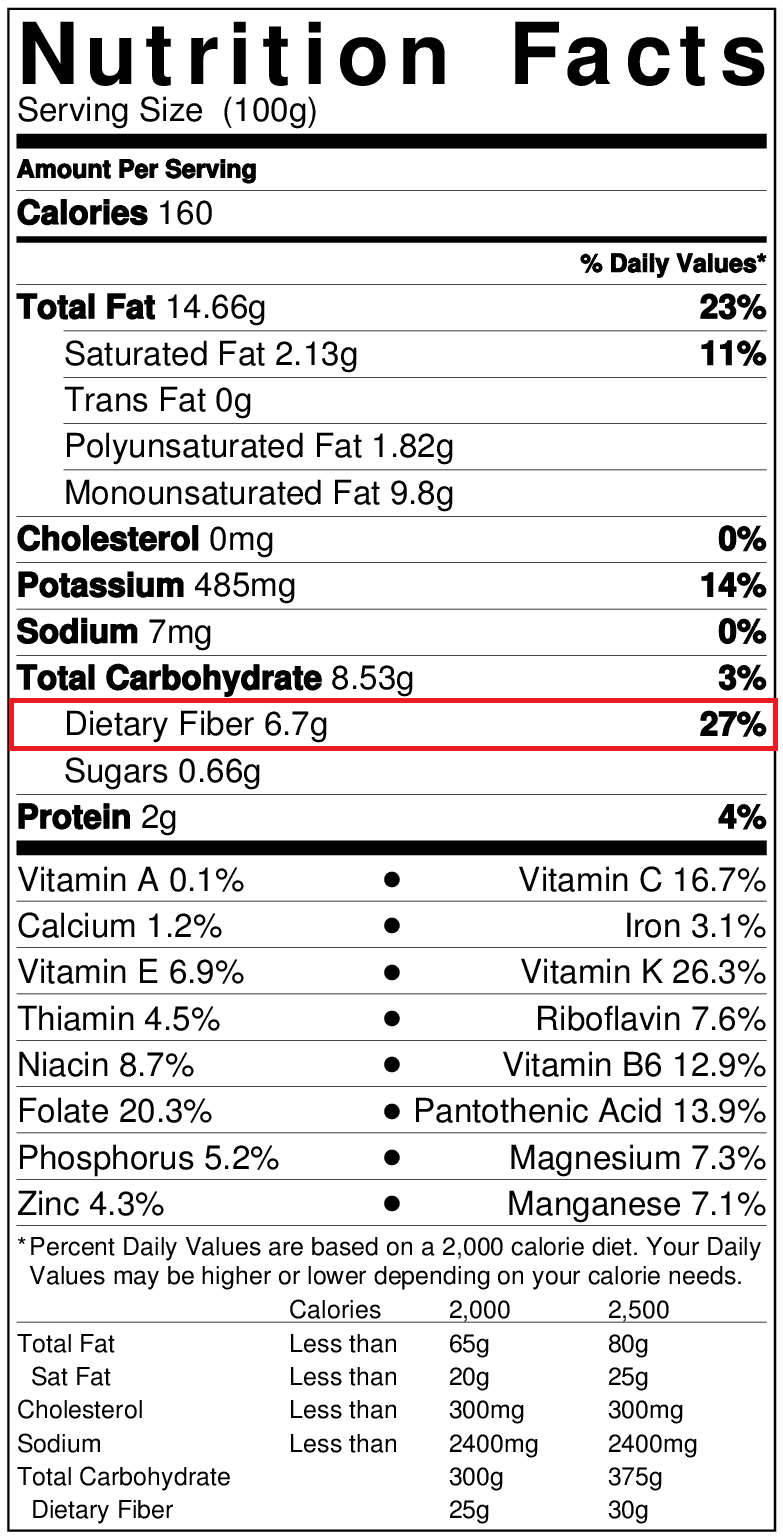
Fibers can be found in many different foods. The amount of fiber per serving can easily be found by looking at the Nutrition Facts Panel for the Dietary Fiber line.

NutritionLabel

Additionally, the fiber content in foods like raw fruits and vegetables that do not have a nutrition label can be found here.

Gastrointestinal Tolerance

Increasing fiber intake suddenly, particularly in individuals consuming a low fiber diet, may result in gastrointestinal effects, such as an increased number of stools per week, having softer stools (but not diarrhea) or having increased flatulence. These effects are due to either bulking effects or due to the fermentation of fiber in the gastrointestinal tract. These potential effects can be minimized by increasing fiber intake more gradually to allow the gastrointestinal tract to adapt. Thus, it may be helpful to decrease fiber intake until these feelings subside and then gradually increase fiber intake until the recommended intake of 14g/1,000kcal is achieved.

The post Recommended Daily Intake appeared first on Fiber Facts.


faq2Do you have questions about low-calorie sweeteners? Want to learn more about maintaining a healthy lifestyle? You asked and we listened. Our resident Registered Dietitians answered the most popular questions about low-calorie sweeteners.

Media Contacts

For media inquiries please reach out to any of the below contacts: