
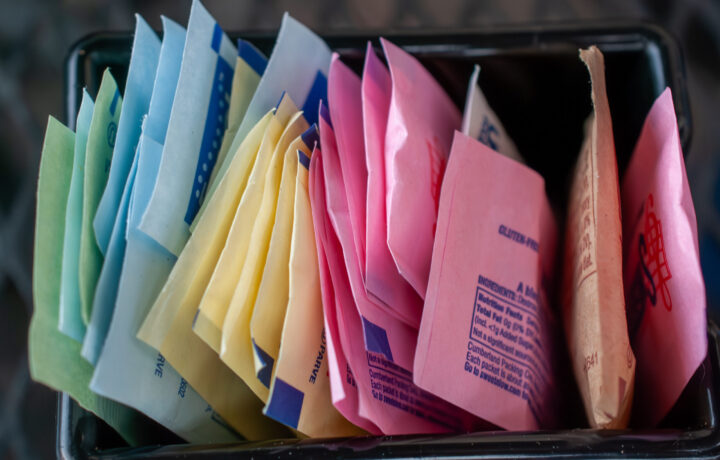
How low and no calorie sweeteners support weight management and blood sugar control
Unlike caloric sweeteners, a low or no calorie sweetener provides consumers with the sweetness they desire without adding calories or carbohydrate to the diet. Many low and no calorie sweeteners (LNCS) have decades of research behind them and multiple benefits for weight loss, use in diabetes management, and health. Sweeteners including saccharin, aspartame, sucralose, stevia, acesulfame potassium (or acesulfame K), and allulose have been studied extensively for safety.
Why do we need low- and no-calorie sweeteners?
Obesity is an issue in the United States, and around the world. Without LNCS, many of the reduced-calorie and light products available to support calorie reductions for weight management or for blood sugar control in diabetes would not be possible. Reducing sugar in the diet has been shown to help reduce calories, and possibly reduce the risks of disease, including metabolic syndrome – which can lead to diabetes and heart disease risk. LNCS has had a huge impact on many food categories, including sweetened beverages, which can help with overall reduction of sugar in the diet.
Quick Facts
The variety of options on the market today each offer properties that make them appealing to various food categories.
- Saccharin is 300-500 times sweeter than sugar, and has been used as a non-caloric sweetener for over a century. In addition to its role as an ingredient to sweeten foods and beverages. Tt’s also a table top sweetener.
- Aspartame is nearly 200 times sweeter than sugar and has a sugar-like taste making it suitable for a variety of products such as beverages and chewing gum. It’s also a tabletop sweetener.
- Sucralose is 600 times sweeter than sugar, and is heat stable. Sucralose sweetens a host of foods and beverages, also available as a tabletop sweetener.
- Stevia is a sweetener derived from the plant, stevia rebaudiana Bertoni, to produce stevia leaf extract. It’s 200-300 times sweeter than sugar. This non-caloric sweetener is used as a tabletop sweetener. It can be used in a variety of recipes, and is heat stable.
- Acesulfame potassium can be used in beverage mixes as well as carbonated drinks. It’s highly heat stable, making it appealing for many types of products. It can be combined with aspartame and sucralose for an improved taste profile. It’s used in beverages, a yogurt, ice cream, jams, jellies, baked goods, toothpaste, mouthwash and chewing gum.
- Allulose is a low calorie sugar with a clean taste. Since it is absorbed, but not metabolized, it has no effect on blood sugar response.
Since each sweetener has unique food processing characteristics, LNCS are sometimes used in combination.
History and Safety
- Saccharin was discovered over a hundred years ago, and is approved in over 100 countries around the world. Saccharin is a non-nutritive sweetener that is not metabolized by the body (it passes through the body unchanged). Early animal studies that questioned its safety aren’t considered relevant to humans, and even a 14 single-generation animal studies involving several species of animals, saccharin was not shown to induce cancer in any organ, even at exceptionally high dose levels.
- Aspartame was approved for use in the United States in 1981. According to the U.S. Food and Drug Administration (FDA), “Aspartame is one of the most exhaustively studied substances in the human food supply, with more than 100 studies supporting its safety”. It’s composed of two naturally occurring amino acids (phenylalanine and aspartic acid) and methanol.
- Stevia has been used for centuries in South America as a tea or sweetener. It’s been used in the US market since the mid 1990s. Stevia is Generally Recognized As Safe (GRAS) by the FDA. It’s also globally approved as safe for use by leading medical and scientific authorities, including the European Food Safety Authority(EFSA) and the Joint Expert Committee on Food Additives (JECFA).
- Sucralose has been approved for use since 1998, and its safety has been validated by several health organizations, including the FDA, European Food Safety Authority, Health Canada and more.
- Acesulfame K was approved by the FDA in 1988, extensively studied and also approved by the Joint Expert Committee on Food Additives of the World Health Organization and the Scientific Committee for Food of the European Union. It’s absorbed into the body and passes, unchanged, in urine.
- Allulose came onto the market in 2015, and is GRAS by the (FDA for use as a food ingredient and in conjunction with other sweeteners.
Common Misconceptions
Weight Loss and Diabetes
Obesity is a complex disorder and treatment should be individualized. LNCS can however help in reduction in the risks associated with obesity, when full-caloric products are replaced with products sweetened with LNCS. A survey of members of the National Weight Control Registry, who have successfully kept weight off, indicated that LNCS helps in weight management. Using low calorie products can help with both weight reduction and weight maintenance, and they can help support the maintenance of a diet for diabetes. LNCS also do not impact blood glucose levels.
Tooth Decay
LNCS are used to reduce calories in beverages, as a table top sweetener, in chewing gum, candies, frozen treats, jams, frostings, yogurt and beverages, and is also used in some medicines (such as cough syrup or cough drop). All of these applications can help reduce the risk of tooth decay.
Gut Health
It’s possible that the health of the gut impacts overall health of all body systems. A study found that sucralose promoted dysbiosis with expansion of Proteobacteriain in mice. Research on diets impact on gut health is emerging, but LNCS may play a positive role.
Summary
In order to be used in our food supply, low and no calorie sweeteners are approved and regulated by the FDA. These sweeteners can play a role in a healthy lifestyle that combines sensible eating habits with physical activity.
Related Resources
Learn more about sweeteners.
 Rosanne Rust MS, RDN, LDN is a registered, licensed dietitian-nutritionist with over 25 years experience. Rosanne is a paid contributor to the Calorie Control Council. As a Nutrition Communications Consultant she delivers clear messages helping you understand the science of nutrition so you can enjoy eating for better health. Rosanne is the co-author of several books, including DASH Diet For Dummies® and the The Glycemic Index Cookbook For Dummies®. A wife, and mother of 3 boys, she practices what she preaches, enjoying regular exercise, good food and festive entertaining. Follow her on Twitter @RustNutrition.